
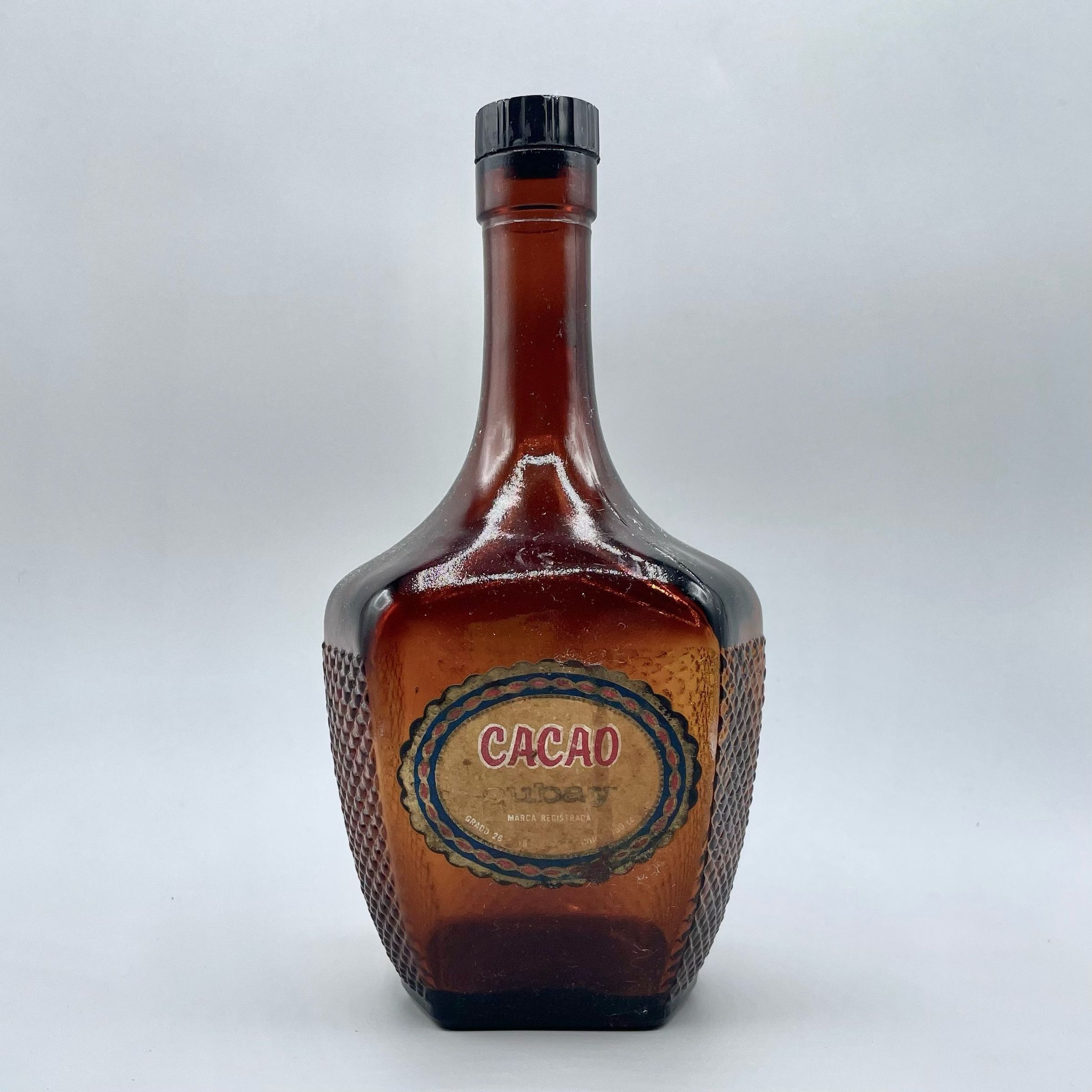
"Cacao Cubay" crème de cacao liqueur bottle
Object/Artifact
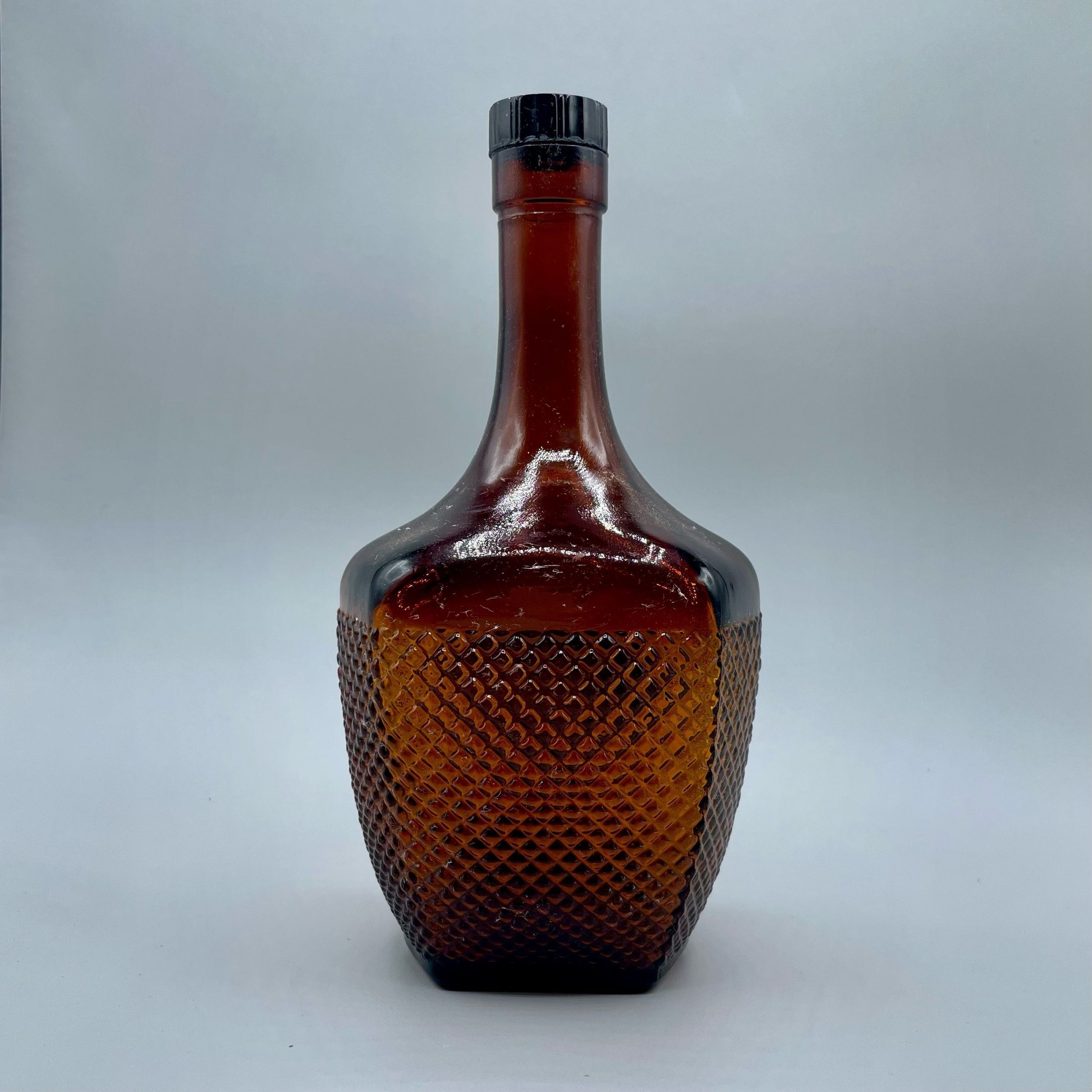
Amber glass liqueur bottle, square-shouldered with a tall neck and a black ribbed screw cap; the lower body is molded with diamond/diaper-textured side panels. An oval front label, bordered in blue and red guilloché bands, reads CACAO (red) above the script brand Cubay, with MARCA REGISTRADA, GRADO 26, and volume 760 cc.
2025.11.9
2025.11
Purchase
Havana
Cuba
Caribbean
Central America
Maker: Cuban state liquor industry, under the Cubay registered marca. The Cubay mark originated in Havana province, initially for liqueurs (first registered 1964); the specific licorera is not named on the visible label. Date: circa 1964–1970s (in range). The Cubay trademark's first registration in 1964 gives a terminus post quem; the 760 cc volume (≈ the older 4/5-quart "fifth," before the ~1979–80 shift to 750 ml) and the vintage bottle/label style point to the 1960s–70s — within the collection range. (Circa; inferred.)
Label
Front
Cacao Cubay Marca registrada. Grado 26 (illegible). Contenido 760 cc
Spanish
Front oval label: CACAO / Cubay (script) / MARCA REGISTRADA / GRADO 26 / Contenido 760 cc. "Grado 26" partly illegible (per existing transcription).
bottle, cap
Glass
Materials: Amber molded glass; black plastic/Bakelite-type screw cap; paper label with printed guilloché border; cacao liqueur contents (if retained). Technique: Machine-molded glass bottle with textured panels; applied paper label; screw closure.
Fair
"Cubay" (Arawak-derived; the "-ay/-hay" ending evokes nearness to a river) began as a distinctive mark in Havana province, initially tied to liqueurs, first registered 1964. This Cacao Cubay belongs to that early Havana liqueur line — predating the better-known Ron Cubay, developed later at the Ronera Central "Agustín Rodríguez Mena," Santo Domingo, Villa Clara (distillery founded 1972; the rum brand often dated to 1996). The Cubay liqueur range historically spanned café, cacao, curaçao, granadina, marrasquino, menta, piña, plátano, anís, limón and coco. Dating rationale: 1964 registration as terminus post quem; "760 cc" reflects the pre-metric "fifth" used before the ~1979–80 move to 750 ml; with the bottle/label aesthetic, a 1960s–70s date is most likely — in range.