
"bebo sher" electric dry shaver, cased
Object/Artifact
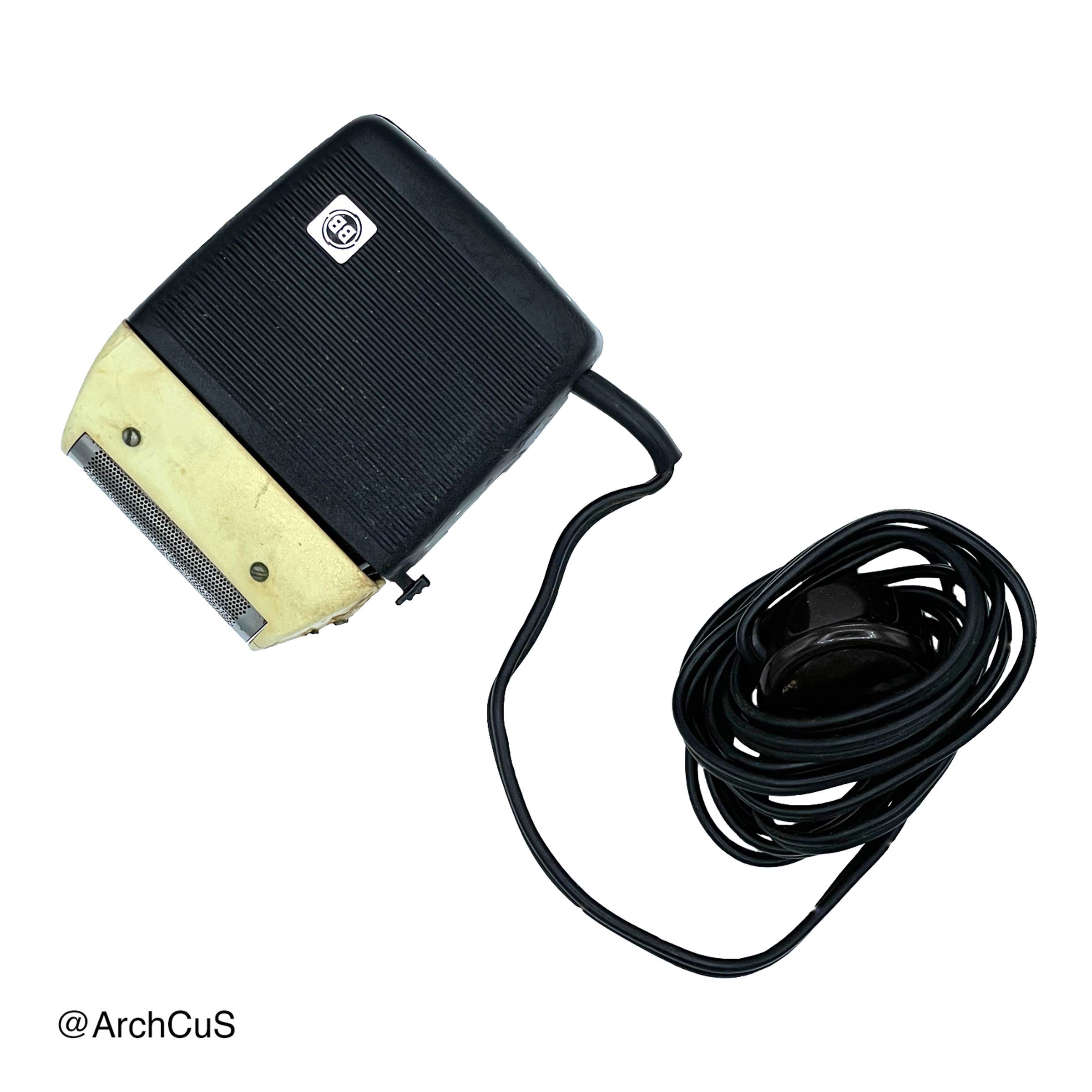
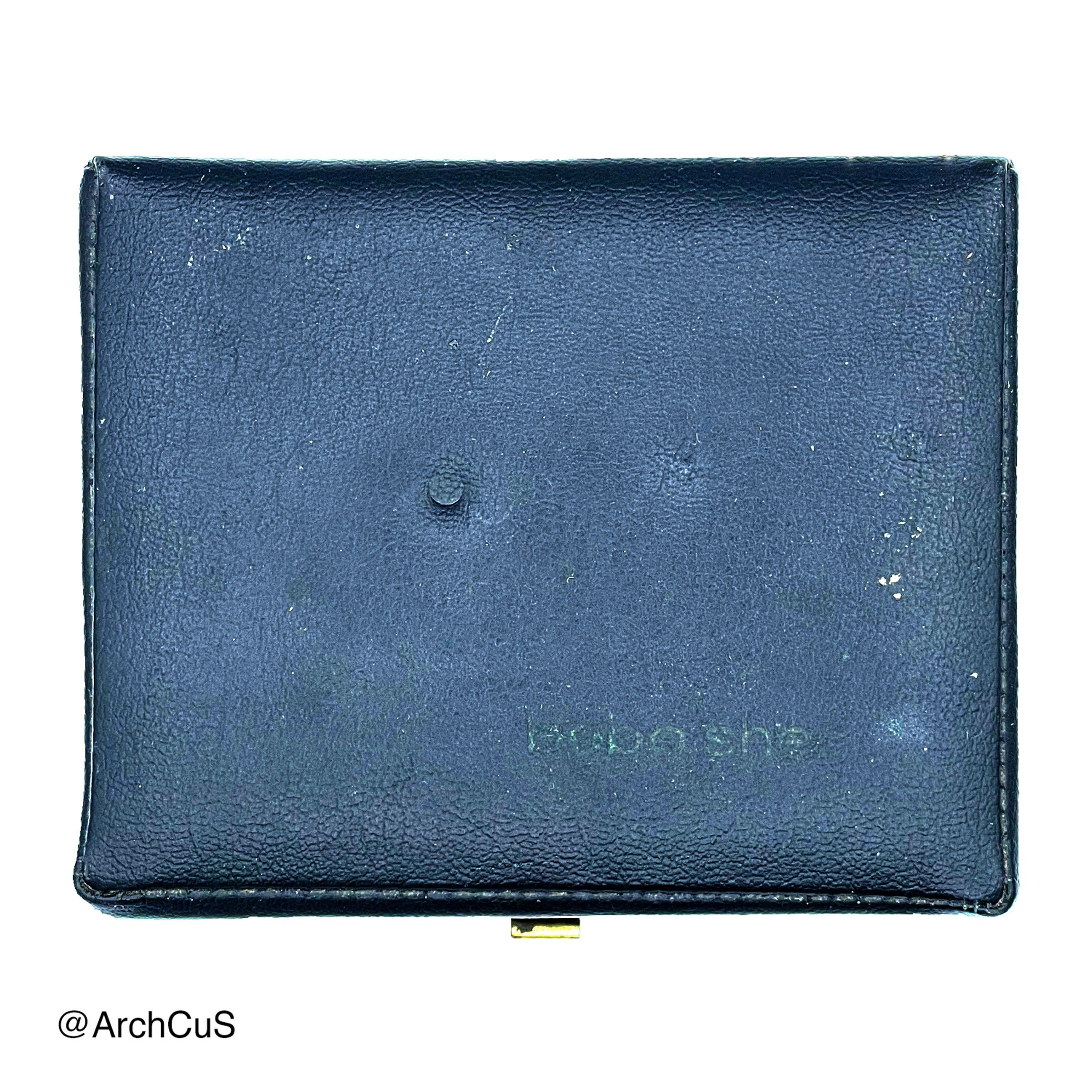
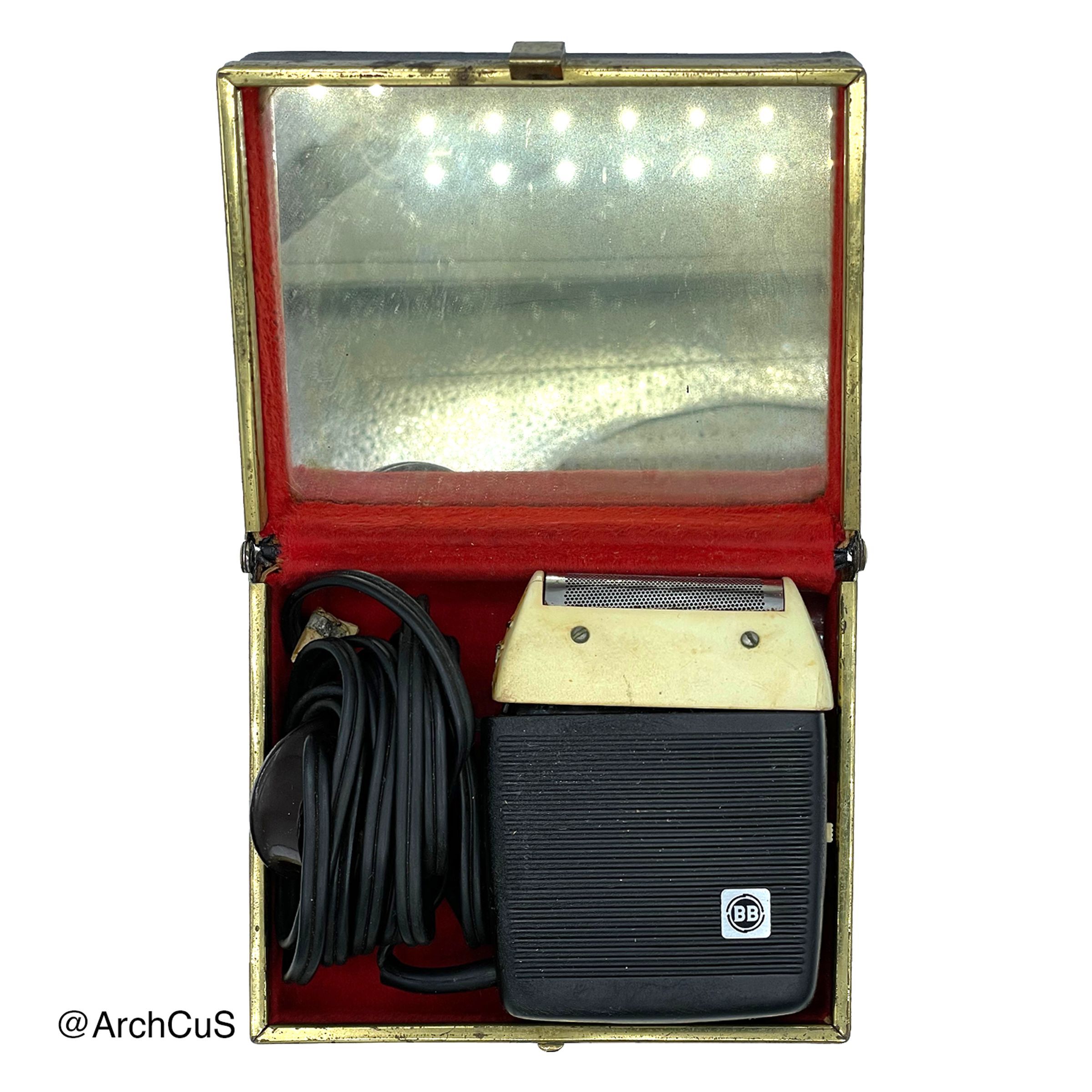
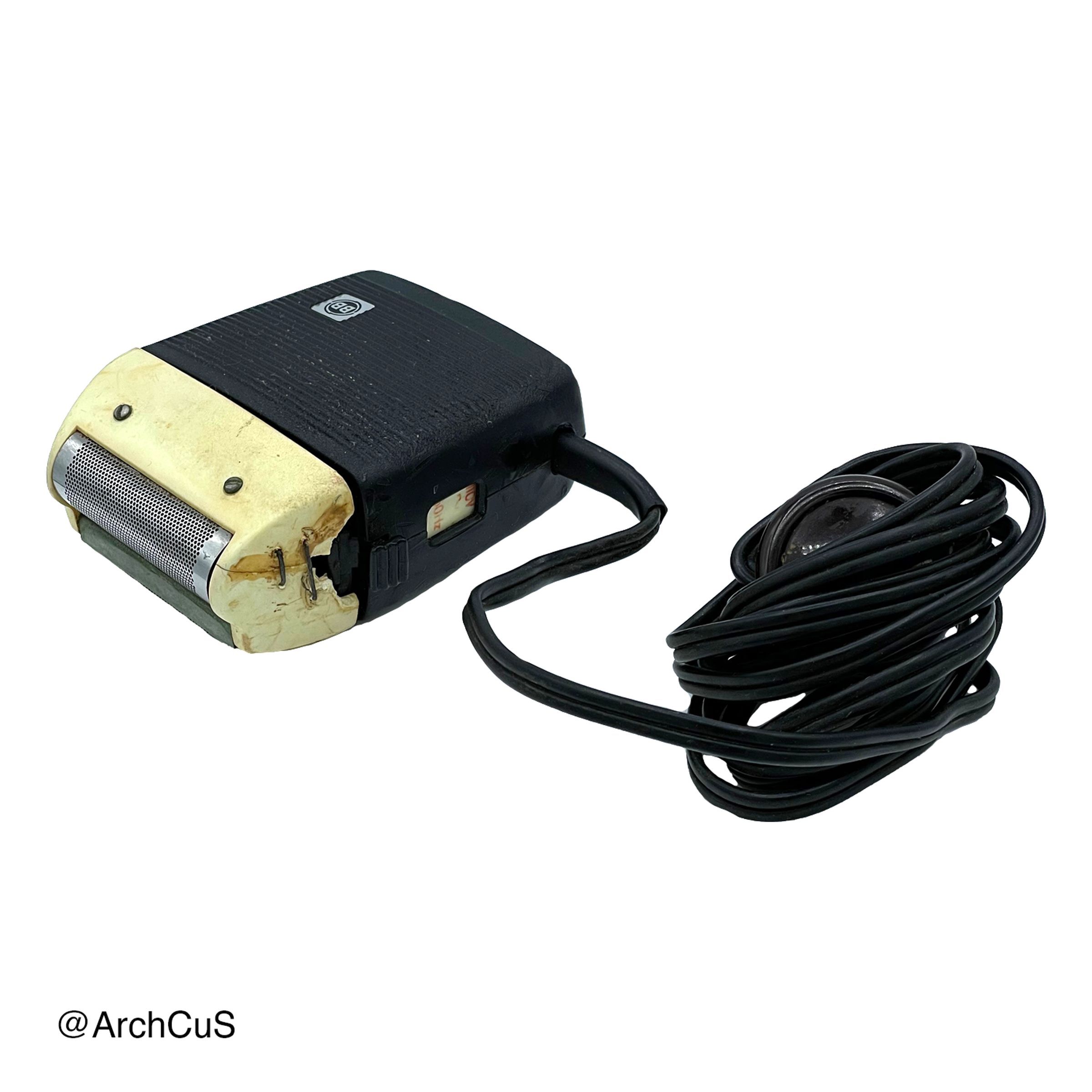
East German foil-type electric dry shaver in its fitted presentation case. The shaver has a black ribbed plastic body with a cream/ivory upper section and a single rectangular metal-foil cutting head; a small white "BB" roundel badge (Bergmann-Borsig) is set into the body. The hinged case has a mirror in the lid, a red flock-lined interior, and brass/gilt metal edging; a coiled black mains cord is stowed alongside. The case lid exterior is embossed "bebo sher."
2025.1.270
Belonged to José A. Cabrera Pérez
The Cabrera Arús family collection
José A. Cabrera Pérez collection
2025.1
VEB BERGMANN-BORSIG
Berlin-Wilhelmsruh
G.D.R.
Central Europe
Europe
bebo sher
Date: Circa 1960s–1970s (the bebo sher line was produced 1962–1991
Inscription
case
bebo sher
Painted
13 x 10 x 5.5
5.5 cm
13 cm
10 cm
Electric dry shaver (body with foil cutting head) with power cord (coiled, with plug) Fitted case with hinged lid, inset mirror, flock lining, brass edging, and clasp (A small cleaning brush and a spare foil were typically included with these sets but are not present.)
Case
Plastic
Metal
Wire
Synthetic
Materials: Molded plastic (shaver body); metal (foil screen, trim, case edging); glass (lid mirror); leatherette over card (case); textile flock (lining); rubber/plastic-insulated cord. Technique: Mass-manufactured molded-plastic and stamped-metal appliance; oscillating-armature (Schwinganker) foil dry shaver; supplied in a fitted presentation case.
Fair
José A. Cabrera Pérez
owner
Havana
Cuba
Caribbean
Central America
ownership
Berlin-Wilhelmsruh
G.D.R.
Central Europe
Europe
production
"bebo sher" (usually lowercased) was the brand name of a model series of razors in the GDR, manufactured in the millions at VEB Bergmann-Borsig from 1962 to 1991; both "bebo" (Bergmann-Borsig) and "sher" are acronyms, and the razors were a fixture of GDR everyday culture, regarded as a positive example of GDR design. Sigmund Bergmann AG, later VEB Bergmann-Borsig, was a heavy-industry firm making turbines, generators, and power-plant components; following a 1953 GDR decree obliging large enterprises to also make consumer goods, it began producing everyday items, with the first razor reaching the GDR market in 1956 and the oscillating-armature bebo sher trademark registered in 1962. The redesigned series was exported to Eastern Europe, and the shaver department at Bergmann-Borsig closed in 1991.