
Flying Eagle Double-Edge Safety Razor
Object/Artifact
Mid-20th-century Chinese double-edge safety razor made by Kwang Yung Safety Razor Set Factory, Shanghai, with a ribbed green plastic handle. A three-piece double-edge (DE) safety razor of standard "T" form. The head is a closed-comb top cap and baseplate in chromed or nickel-plated metal, threaded onto a slender ribbed handle of green plastic. A short metal collar joins the handle to the head, and the handle terminates in a decorative knurled metal end cap with a small ball finial. The overall silhouette is closely modeled on mid-20th-century Western three-piece safety razors of the Gillette "Tech" lineage. Surface wear and minor tarnish are visible on the metal parts; the green handle remains bright.
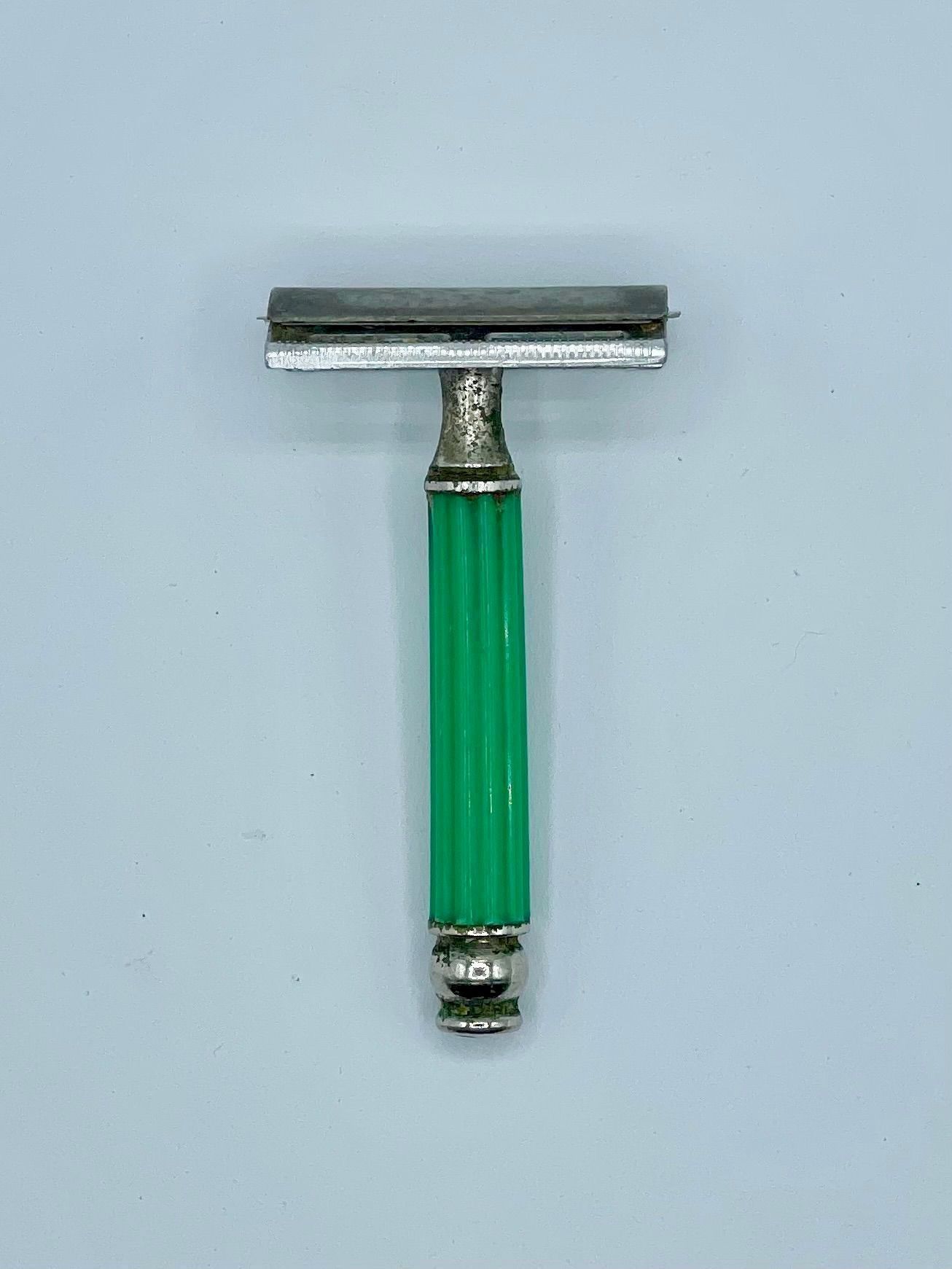
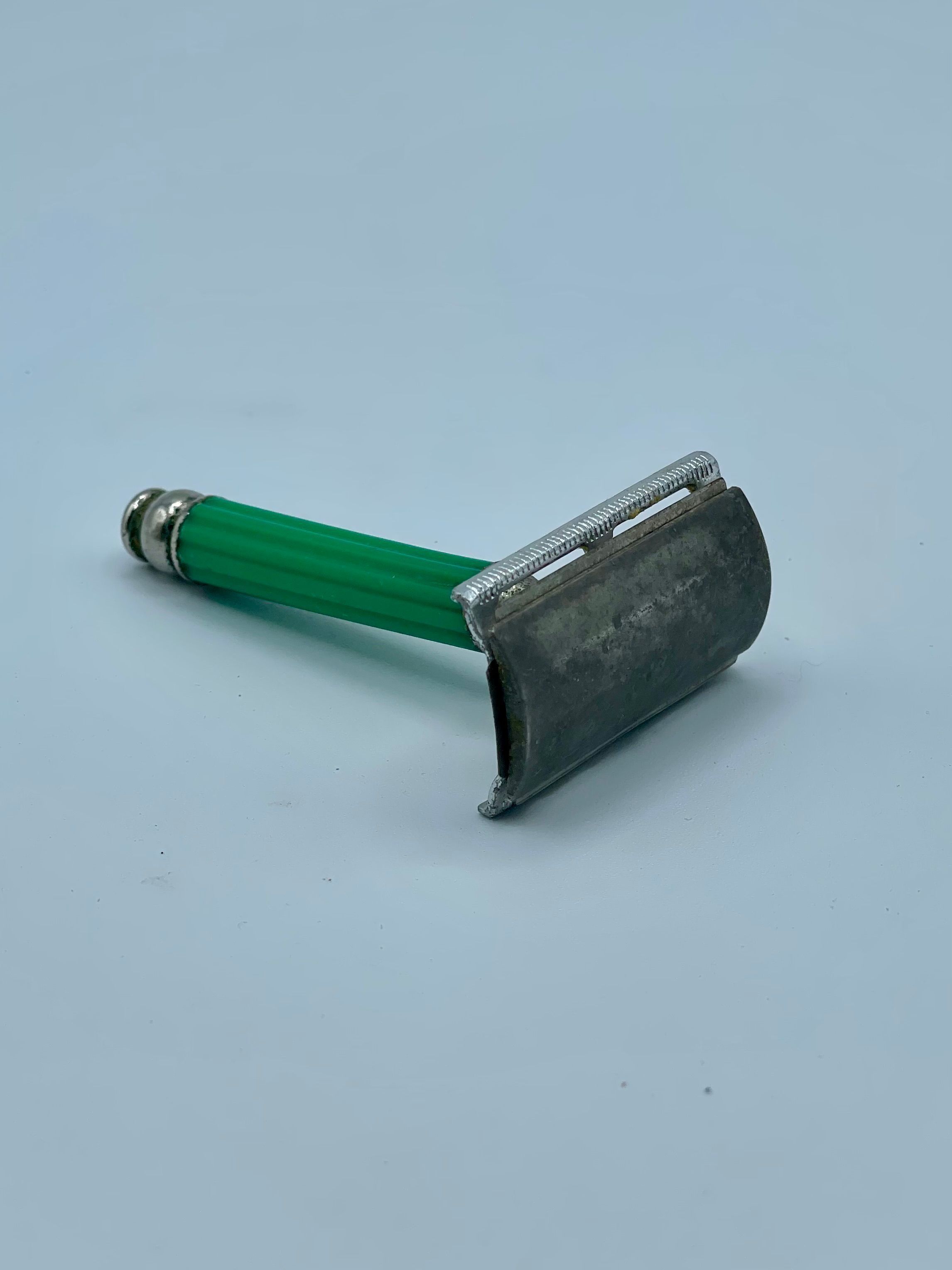
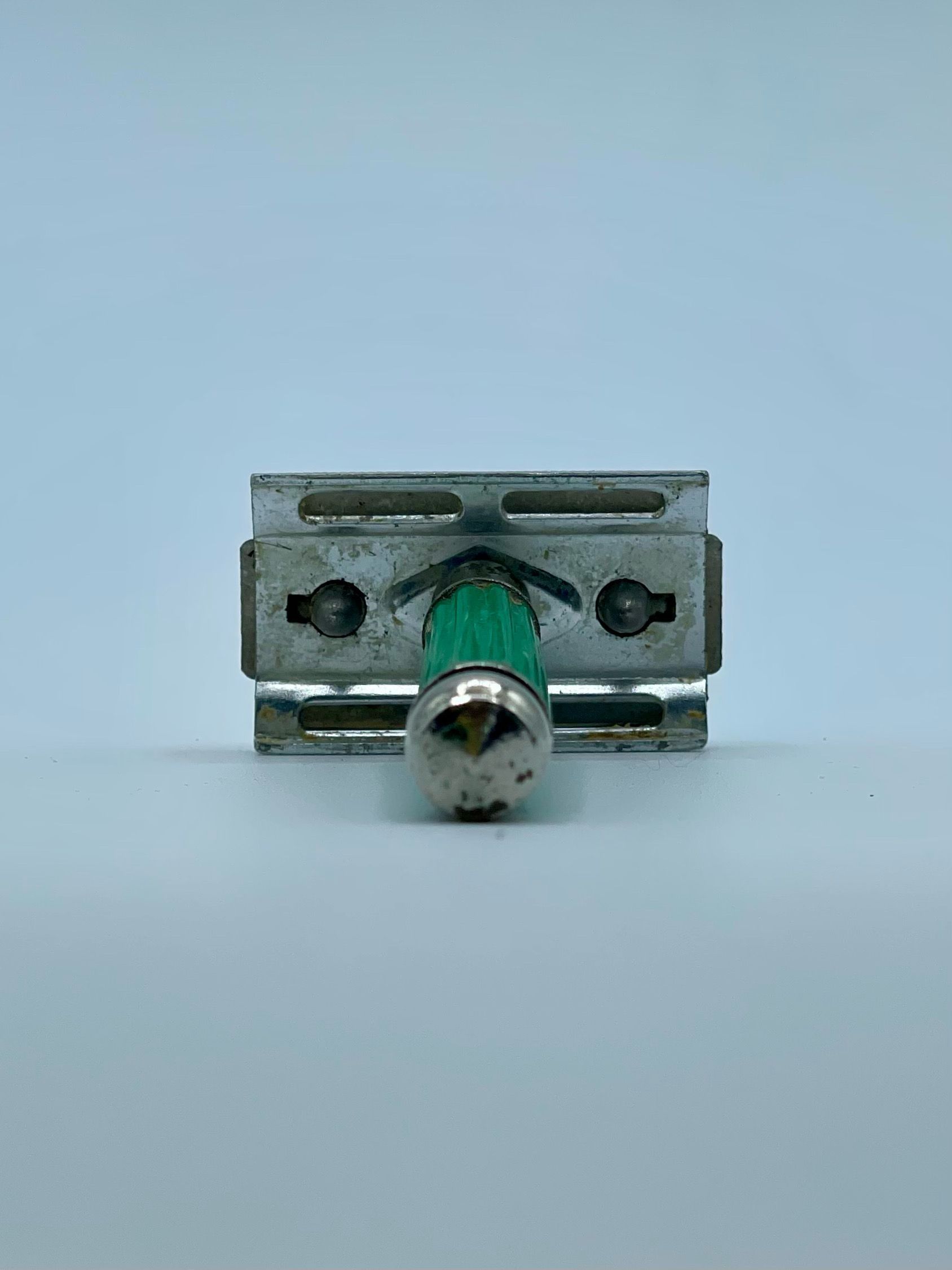
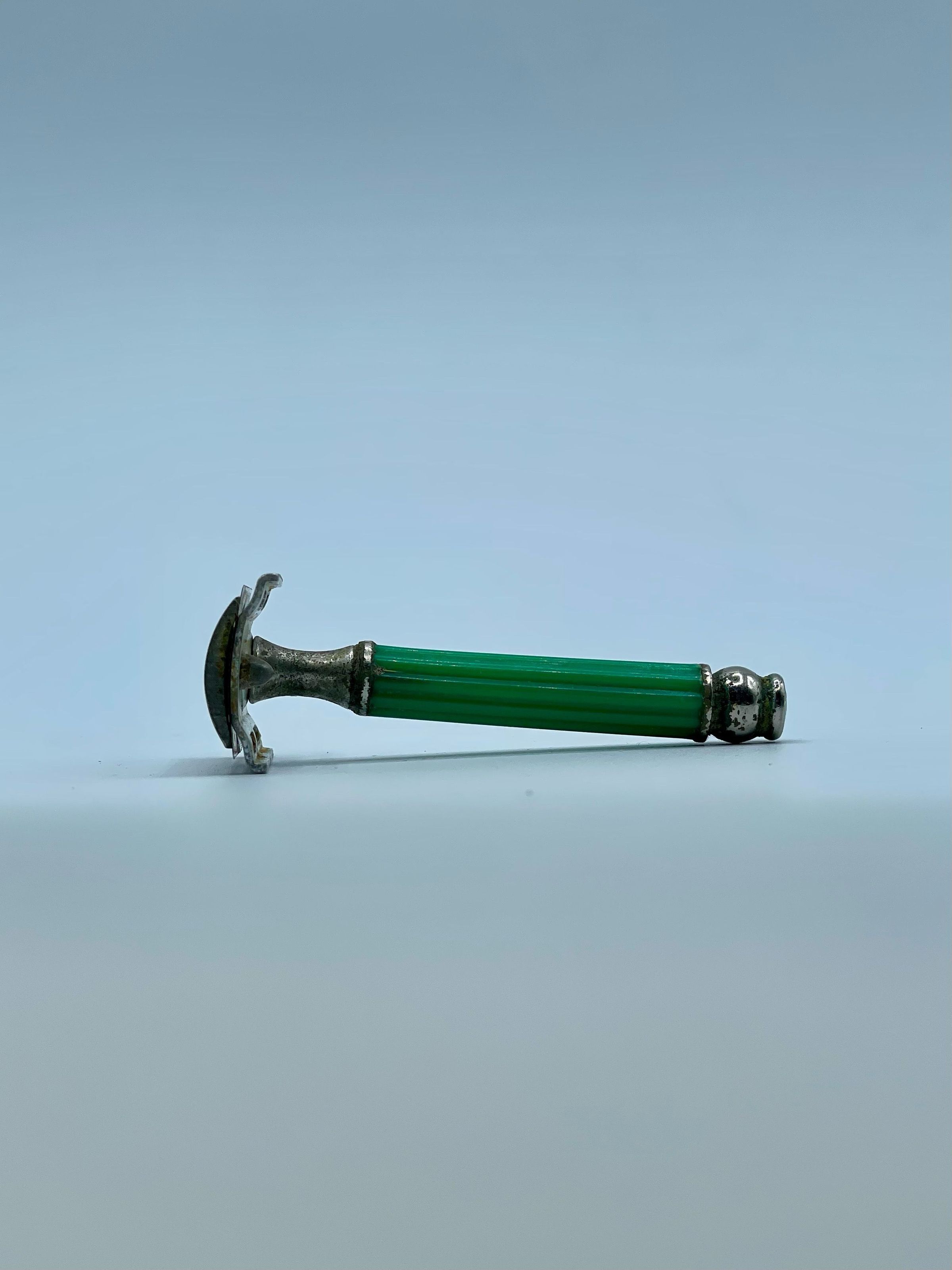
2025.1.1
One of the razors belonging to and used by Leopoldo Arús Gálvez
The Cabrera Arús family collection
2025.1
Kwang Yung Safety Razor Set Factory
Shanghai
People's Republic of China
Asia
Flying Eagle brand
Mid-20th century, likely c. 1950s–1970s
Plastic
Metal
Die-cast/stamped metal components; molded and machined plastic handle with vertical fluting; threaded three-piece assembly
Leopoldo Arús Gálvez
Kwang Yung Safety Razor Set Factory
Havana
Cuba
Caribbean
Central America
Purchase
Shanghai
People's Republic of China
Asia
Production
Kwang Yung Safety Razor Set Factory (Wade-Giles romanization; pinyin Guāngróng, 光荣, meaning "glorious/honorable") in Shanghai is the manufacturer best known for the Flying Eagle (飞鹰牌, Fēiyīng pái) brand of double-edge safety razors. The factory produced large quantities of inexpensive three-piece DE razors over many decades for the Chinese domestic market and, increasingly from the late 20th century, for export. Flying Eagle razors are widely discussed in wet-shaving communities (e.g., Bruce on Shaving, Badger & Blade) as low-cost but serviceable razors closely modeled on the Gillette Tech pattern, and were historically not common in Western retail.
The three-piece, closed-comb T-shape with a slim ribbed handle and decorative ball-knurl end cap is a recognizable Flying Eagle variant. The basic design descends from the Gillette Tech (introduced 1938), one of the most widely copied razor patterns of the 20th century. Many Chinese, Soviet, and Eastern European factories produced Tech-style razors under their own brand names.
After the U.S. embargo (formalized 1962), Cuba's consumer goods supply shifted toward socialist-bloc imports. While the USSR and Eastern Europe supplied the largest share, Chinese goods — including bicycles, thermoses, enamelware, textiles, and toiletries like razors and toothbrushes — circulated through Cuban state retail networks.