
Construction Worker's Hard Hat (Casco de Protección)
Object/Artifact
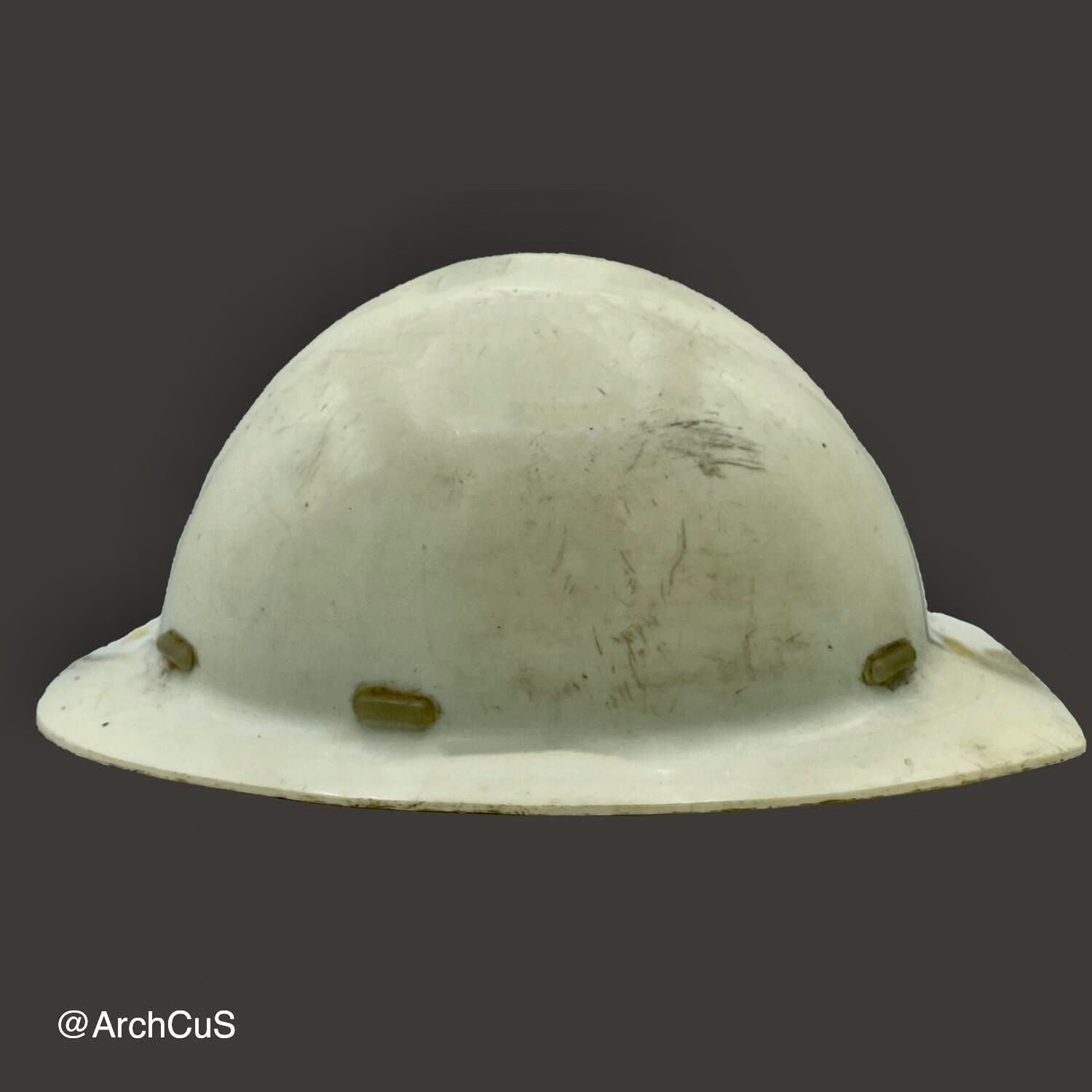
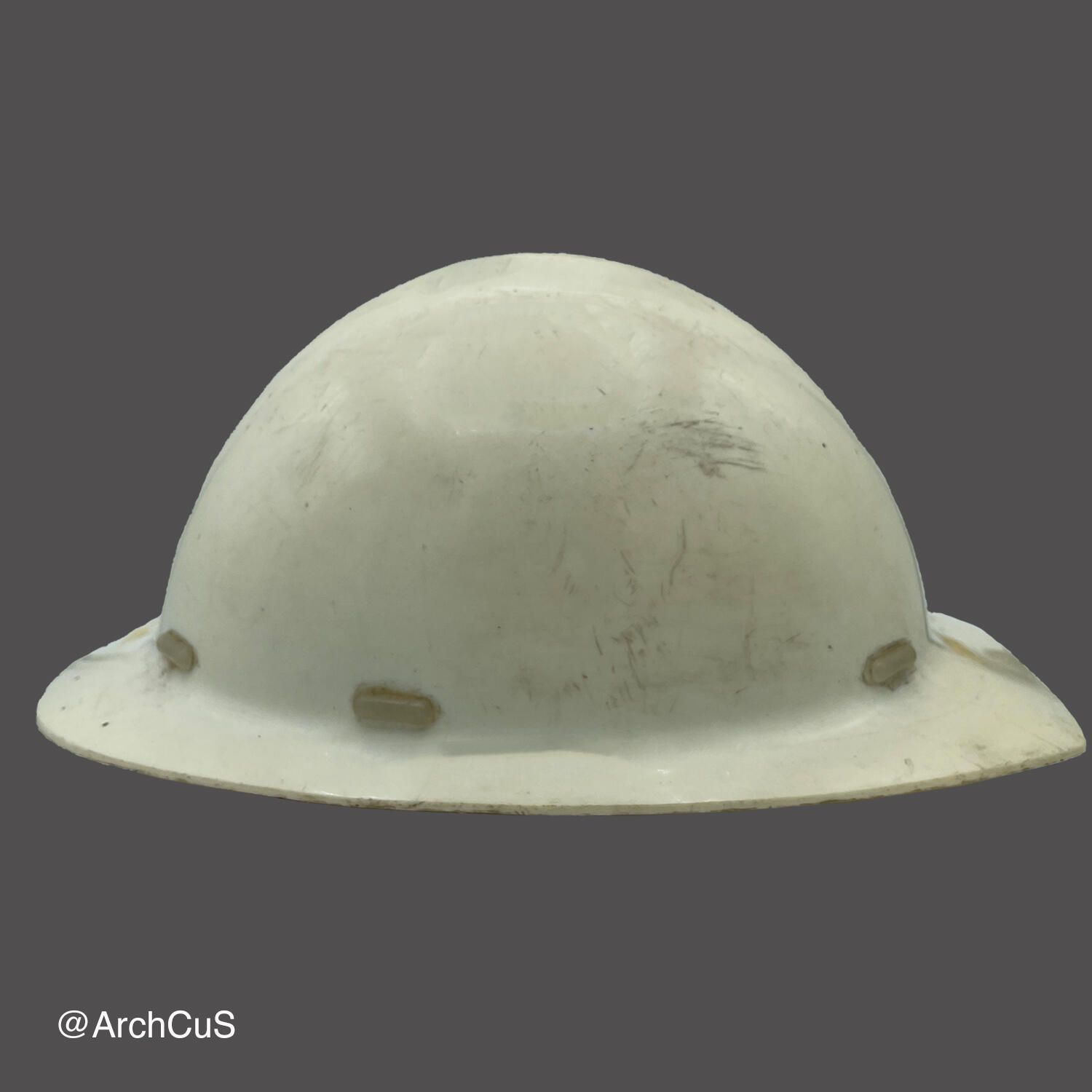
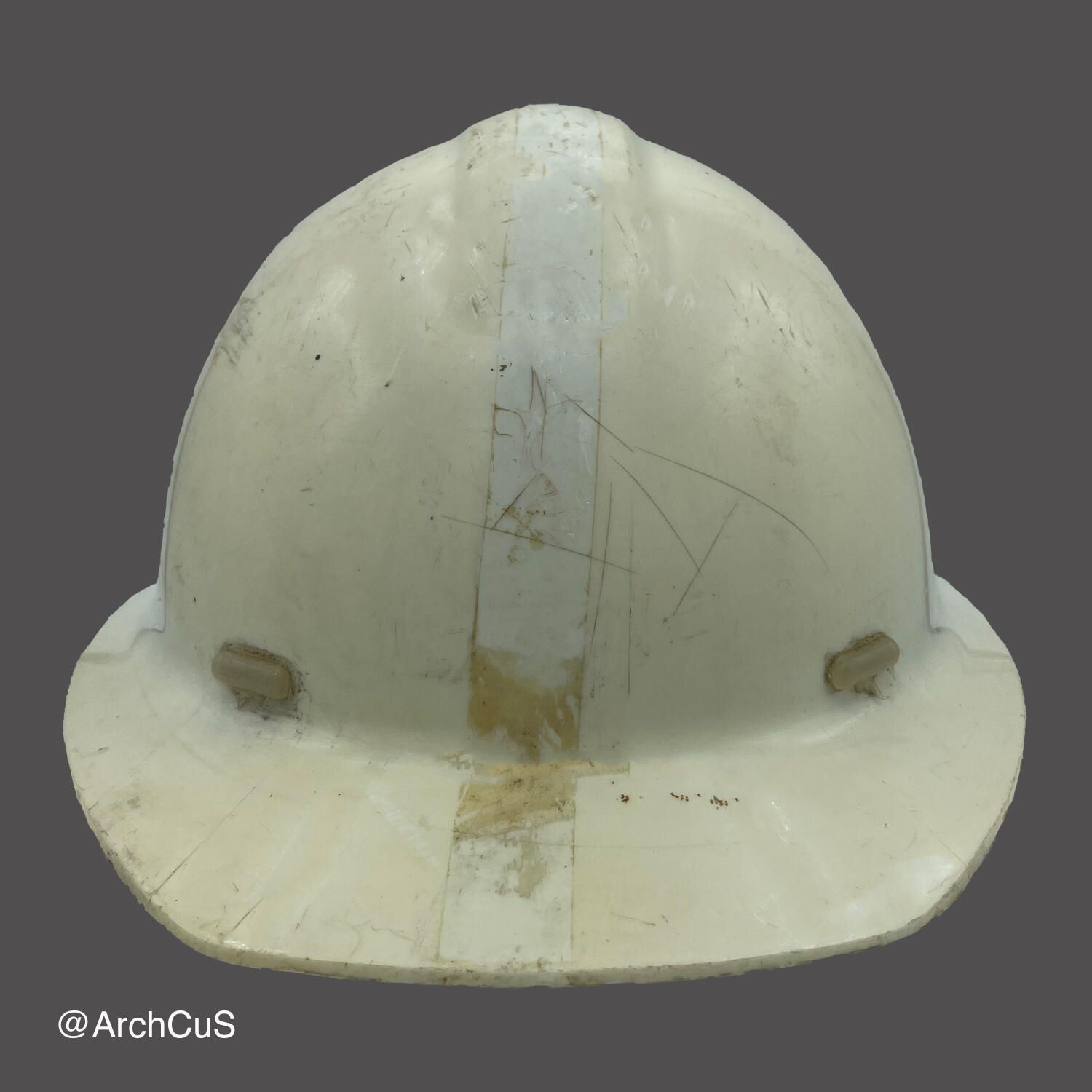
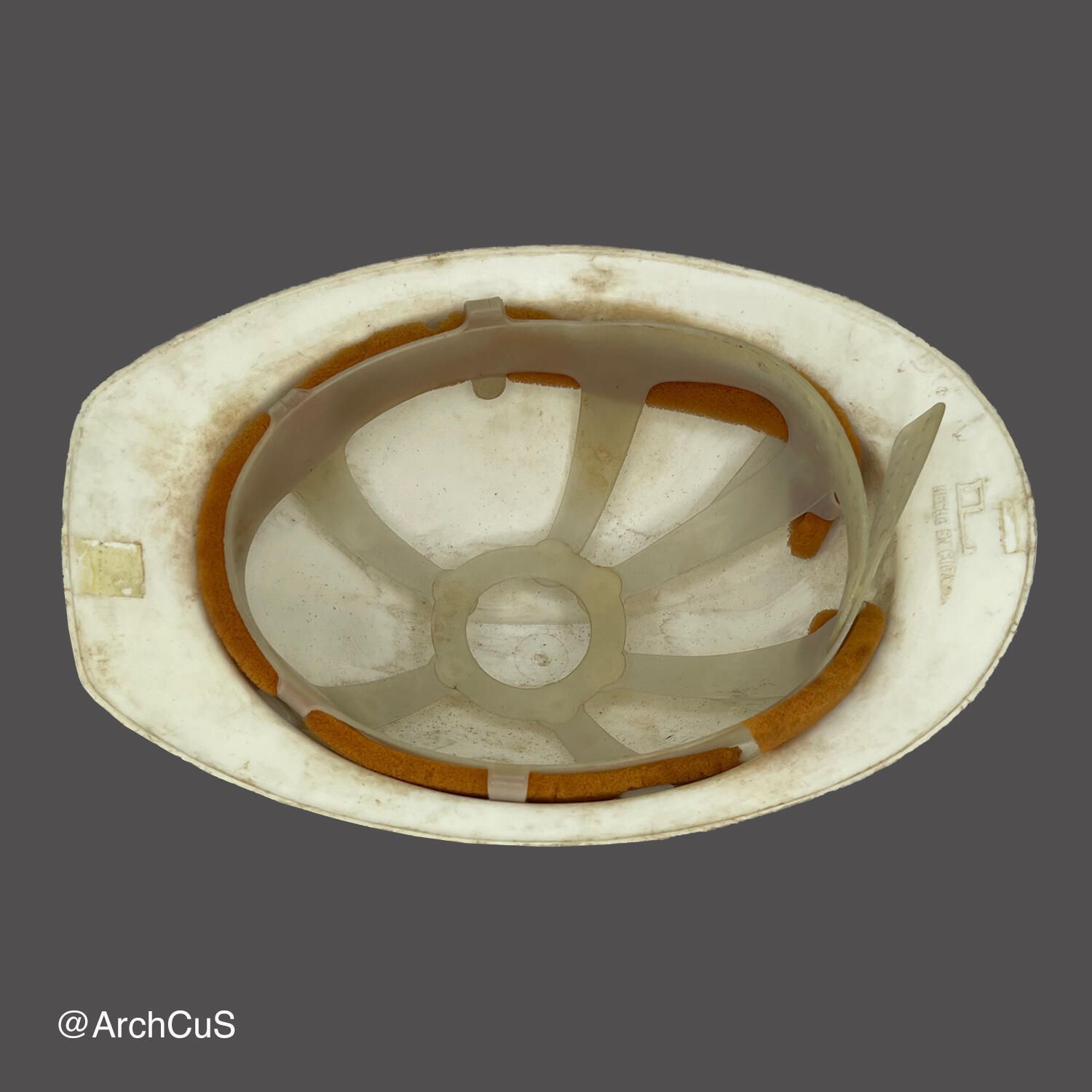
A white, full-brim safety helmet of molded white plastic, with a rounded dome crown and a continuous brim encircling the whole hat (as opposed to a front-peak "cap style"). The interior retains its suspension system: a molded plastic crown cradle (web of radiating straps converging on a central boss) attached to a headband, with a oam sweatband (now brown/discolored) around the brow. The interior carries molded text. The hat is a single assembled unit.
2025.1.16
From the Arús Caraballo household
owned by Leopoldo Arús Gálvez
The Cabrera Arús family collection
2025.1
MINIL
The MINIL attribution and style suggest a likely range of roughly the 1960s–1980s.
Inscription
inside
IL HECHO EN CUBA
Spanish
Light Industry Made in Cuba
Interior (molded, transcribed as recorded): - "IL" (for Industria Ligera) - "HECHO EN CUBA" (Made in Cuba)
14 cm
22 cm
31 cm
1
Plastic
Injection- or compression-molded plastic shell; molded/assembled internal suspension harness; riveted side fittings; molded-in interior lettering.
Fair
Leopoldo Arús Gálvez
owner
MINIL
producer
Leopoldo Arús Caraballo
possible provider
Havana
Cuba
Caribbean
Central America
use
This is a full-brim (wide-brim, 360°) hard hat, a style favored for outdoor construction and industrial work because the all-around brim sheds rain and sun and offers more coverage than the front-peak "cap" style. The internal suspension — a molded cradle of straps converging on a central point, attached to an adjustable headband with a sweatband — is the standard mid-20th-century hard-hat design, which works by suspending the shell a couple of centimeters off the skull so that an impact is absorbed by the suspension webbing rather than transmitted directly to the head. A construction/industrial hard hat fits coherently with a profile of someone working in the Cuban electrical/industrial sector. This object therefore should have been obtained by Leopoldo Arús Gálvez's son, Leopoldo Arús Caraballo.