
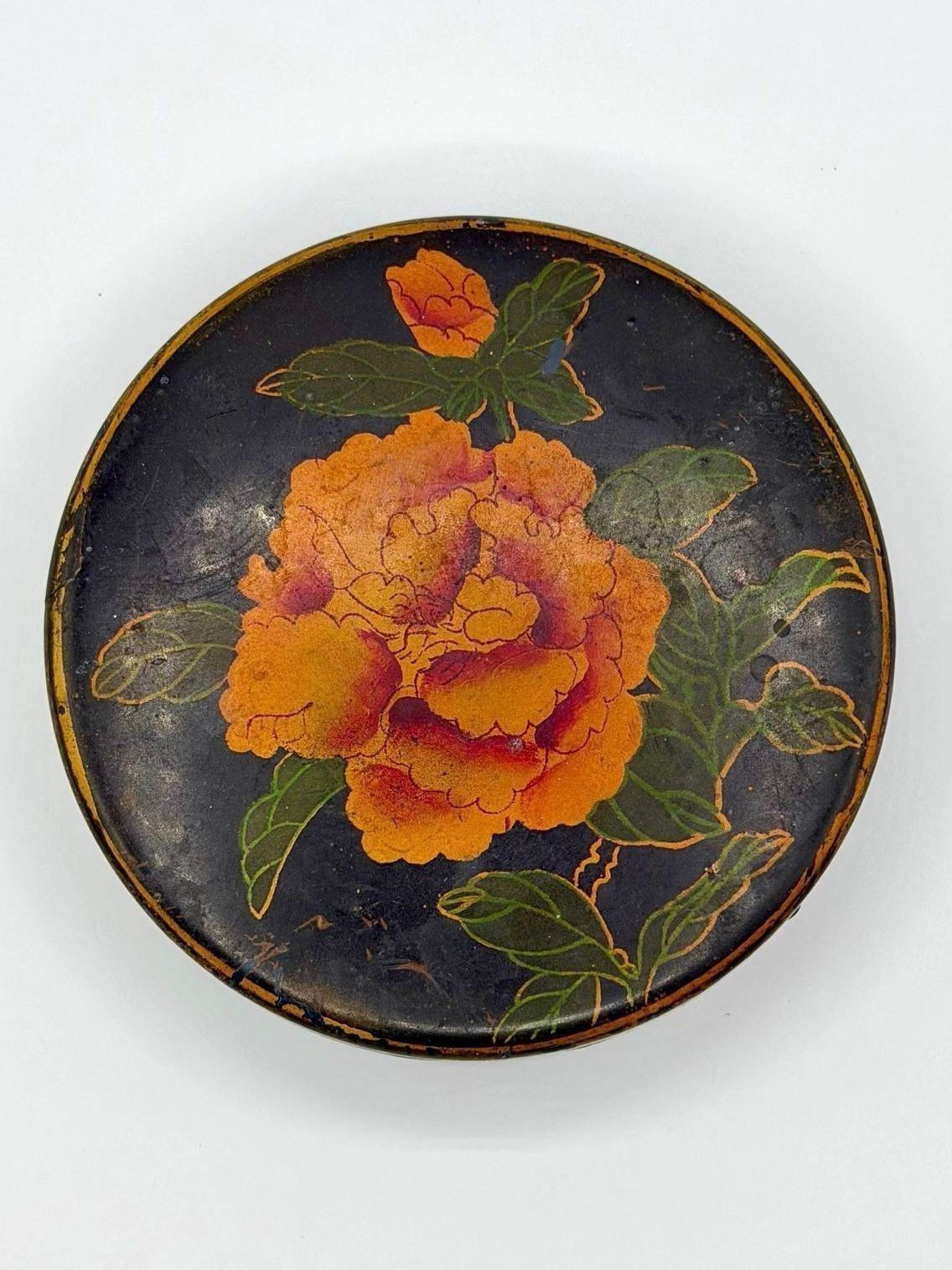
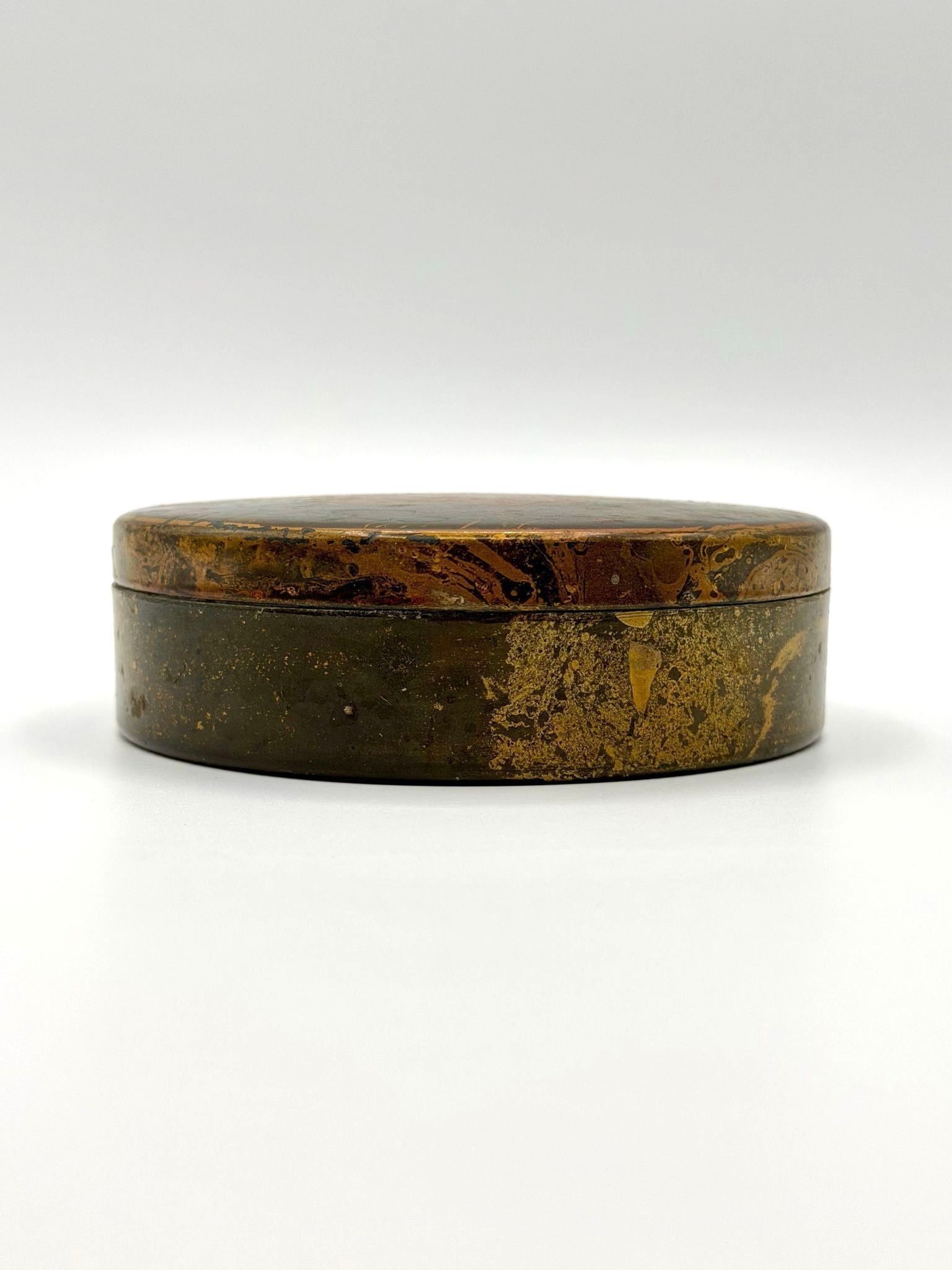
Decorative lidded box with painted peony (East-Asian floral style)
Object/Artifact
A shallow, round lidded box (covered trinket/keepsake box). The lid is hand-painted with a large orange/coral peony and a bud amid green leaves on a dark near-black (possibly very dark blue) ground, outlined and detailed in gilt/ocher within a gilt rim line. The lid edge and cylindrical base carry a mottled/marbled gold-brown-and-black lacquer finish.
2025.20.16
2025.20
Gift
Date: Undetermined; no marks. Cannot be confirmed within 1959–1990 and may fall outside it. Tentative. Place of Origin: Undetermined. The painted-peony-on-dark-ground idiom is East Asian (Chinese, or Western chinoiserie/japanned ware), suggesting an imported decorative object, but origin can't be confirmed from the object. Tentative.
Materials: Lacquered/painted; body most likely papier-mâché or wood (possibly japanned metal) — not determinable without handling. Painted decoration with gilt detailing. Technique: Hand-painted floral decoration with gilt outlining over a dark ground; marbled/mottled lacquer finish on the sides; varnish/lacquer coat, now crackled and worn.
Good
Small round lidded boxes of this form had many uses across cultures — for cosmetics (powder, rouge), incense, sweets, tea, seals, or trinkets. The shallow proportions here suggest a powder box, incense box, or sweetmeat box rather than a deeper storage container.
The peony (often paired with a bud and foliage) is one of the most enduring motifs in East Asian decorative art. In Chinese tradition the peony is the "king of flowers," symbolizing wealth, honor, and feminine beauty; it appears constantly on porcelain, lacquer, textiles, and painting from the Song dynasty onward. The motif was also widely adopted in Japanese decorative work and, via export trade, in European "Chinoiserie" and japanned wares from the 17th–19th centuries. So the motif alone doesn't pin down origin.
Possible tradition this piece could belong to: Later 20th-century reproduction or souvenir piece — many such boxes were produced for the Western market through the mid-20th century; the relatively pictorial, slightly soft-edged painting style here is consistent with this period.