
Beret, olive green (boina verde olivo)
Clothing/Dress/Costume
Adult's round, flat-crowned beret of olive-green woven cloth. Constructed crown with a separate tan twill lining; headband finished with a dark leather or imitation-leather sweatband; interior woven-cotton adjustment tape/drawstring exits at the rear. No badge, cockade, or unit insignia present or retained.
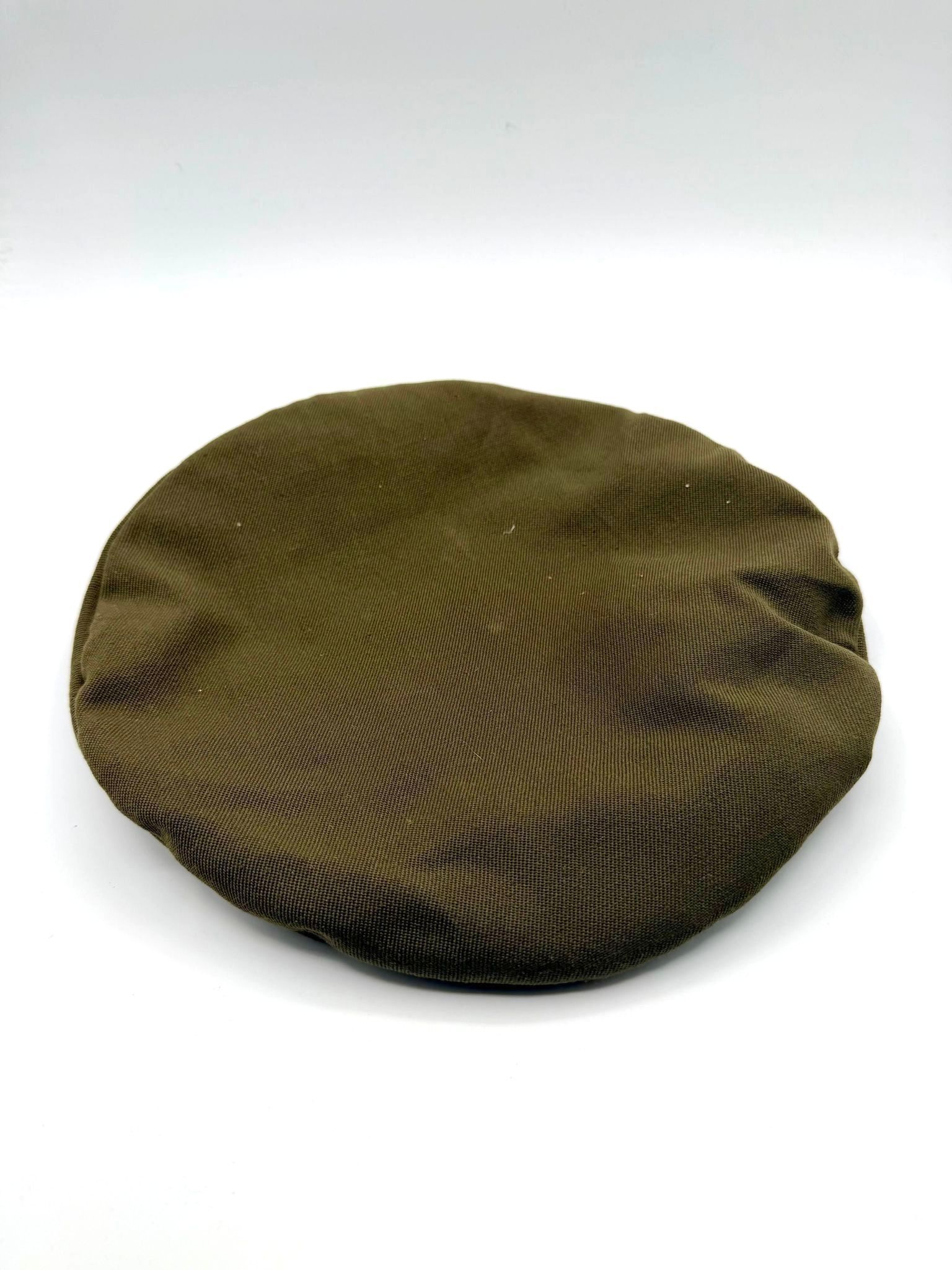
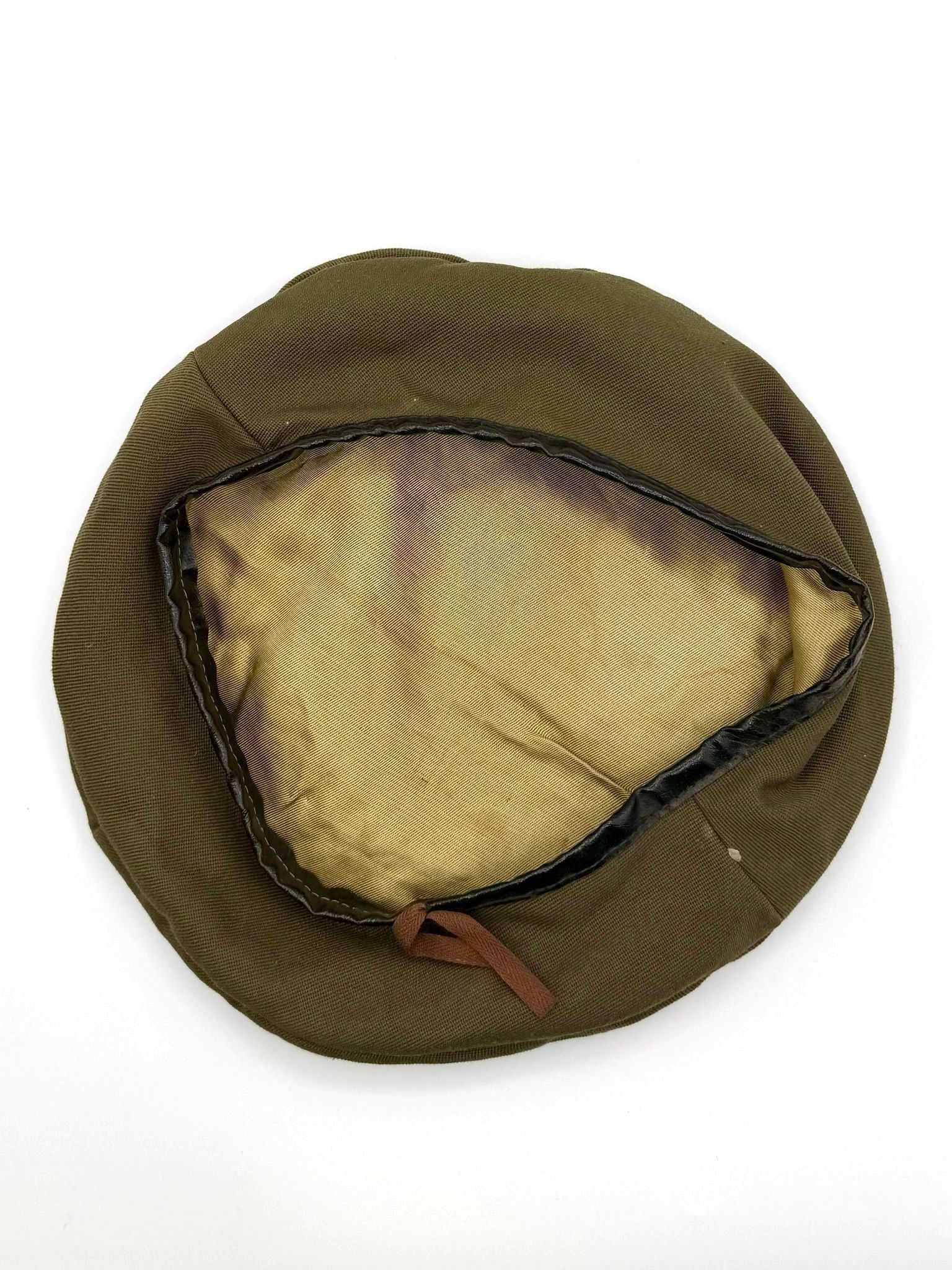
2026.1.5
María Teresa Cornide Hernández collection
2026.1
Belonged to Maria Teresa Cornide
Hat
Materials: Shell — olive-green plain-weave cotton or cotton blend (fiber unconfirmed). Lining — tan/khaki twill-weave cotton. Sweatband — black leather or imitation leather (unconfirmed). Adjustment tab — woven cotton herringbone tape. Technique: Machine-sewn; separately lined constructed crown with a bound (edge-folded) headband and interior drawstring/tab sizing.
Maker: Unknown. No maker's mark, label, or stamp present (confirmed after cropping, zooming, and contrast-enhancing the interior). Date: Not datable from the object. Circa 1960–1985 (inferred, tentative). Place of Origin: Cuba (attributed). No country-of-origin label or maker's mark is present, so Cuban manufacture is inferred rather than confirmed; Cuban-used berets of this period were both domestically produced and imported from socialist-bloc suppliers. Tentative.
Good
M.T.T.
Havana
Cuba
Caribbean
Central America
use
The olive-green beret specifically became the emblem of the Milicias Nacionales Revolucionarias (MNR) and the Milicias de Tropas Territoriales (MTT): the olive-green beret became the symbol of having passed all the tests of the militia course, which culminated in the well-known 62-kilometer march. Each militiaman was required to complete the 62 kilometers on foot to join a militia battalion and then receive the emblematic olive-green beret. The early-1960s militia uniform paired blue denim shirts with olive-green trousers and berets. The militia force, which numbered some 300,000 in 1961 and played a role in the response to the Bay of Pigs invasion, lost relevance around 1964, and in 1965 the MINFAR prohibited civilian arms possession. If this is an MNR militia beret, a date of circa 1960–1965 would apply.