
Lenticular ("stereo-vario") pocket calendar, 1985 — Soviet export for the Cuban (Spanish-language) market
Object/Artifact
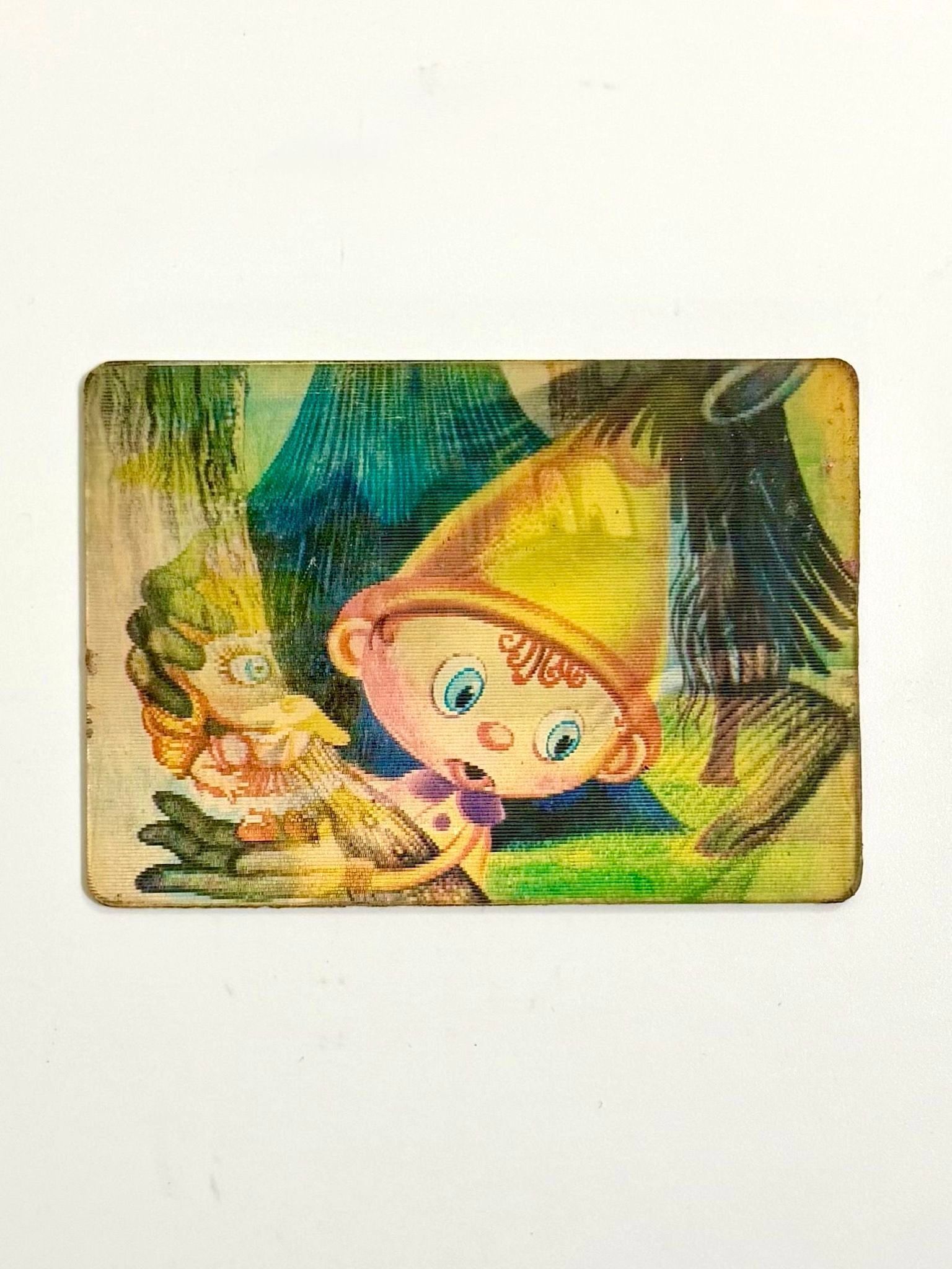
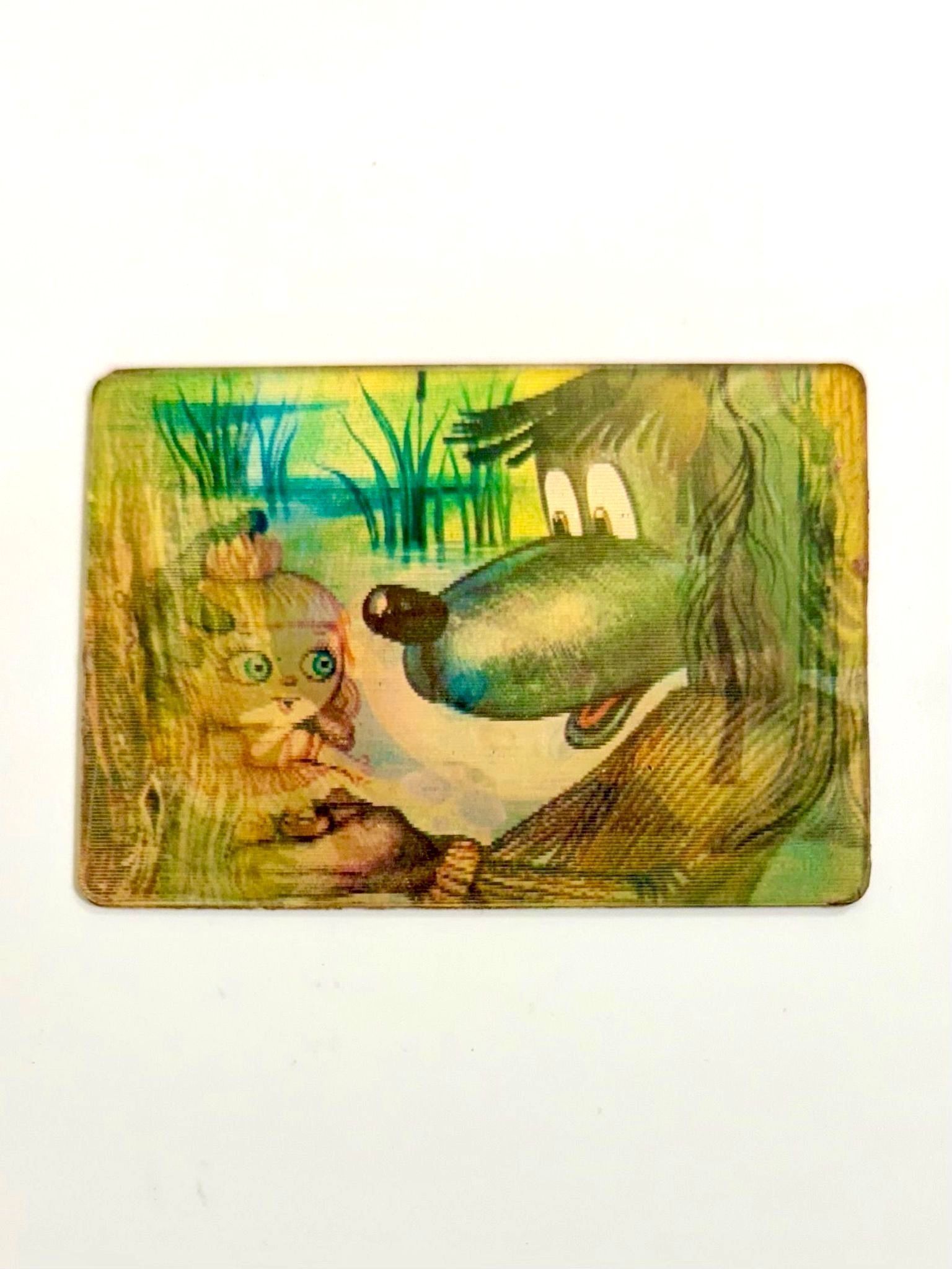
Small rectangular lenticular pocket-calendar card with rounded corners and a finely ribbed lens surface. The picture side carries an interlaced ("flip") color illustration that alternates between two children's fairy-tale scenes depending on viewing angle: (1) a wide-eyed child in a pointed pixie/gnome cap amid toadstools and foliage, with a small cursive Cyrillic word worked into the artwork; (2) a fluffy big-eyed kitten beside a duck among pond reeds, with a small dark animal peering from a burrow at the rear. The reverse carries a printed 1985 calendar: twelve months in Spanish (enero–diciembre) in four rows of three, weekday columns lettered L M M J V S D (lunes–domingo, week beginning Monday), with Sundays/holidays in red, all within a dotted diamond border.
2025.11.33
2025.11
Purchase
VBPK
1984
1980s
U.S.S.R.
Eastern Europe
Europe
Picture side — a small cursive Cyrillic word within the gnome scene (artwork element; reading uncertain). Reverse — "© Hecho en la URSS · VBPK" and "1985" (red); full Spanish monthly grid with L M M J V S D weekday initials.
Materials: Lithographically printed paper/card laminated to a ribbed plastic (acrylic) lenticular lens sheet; verso offset-printed in black and red on the paper backing. Technique: Lenticular ("stereo-vario"/переливной) flip printing on the obverse; two-color (black and red) offset lithography for the calendar grid on the verso.
Fair
U.S.S.R.
Eastern Europe
Europe
production
Soviet stereo-vario lenticular calendars were widely collected in the USSR through the 1970s–80s and frequently carried cartoon and fairy-tale characters. The kitten-and-duck scene resembles imagery from Soviet children's animation (the kitten-and-duckling pairing of "Котёнок по имени Гав" is one possibility) — source unconfirmed, offered only as a lead.
The Spanish-language imprint "Hecho en la URSS" paired with an all-Spanish calendar establishes this as a Soviet export novelty made for the Spanish-speaking (Cuban) market.