
LP disc — Bailes Populares Internacionales para Grupos Aficionados, Serie III (Europa–América) No. 2 (Consejo Nacional de Cultura)
Audio Recording
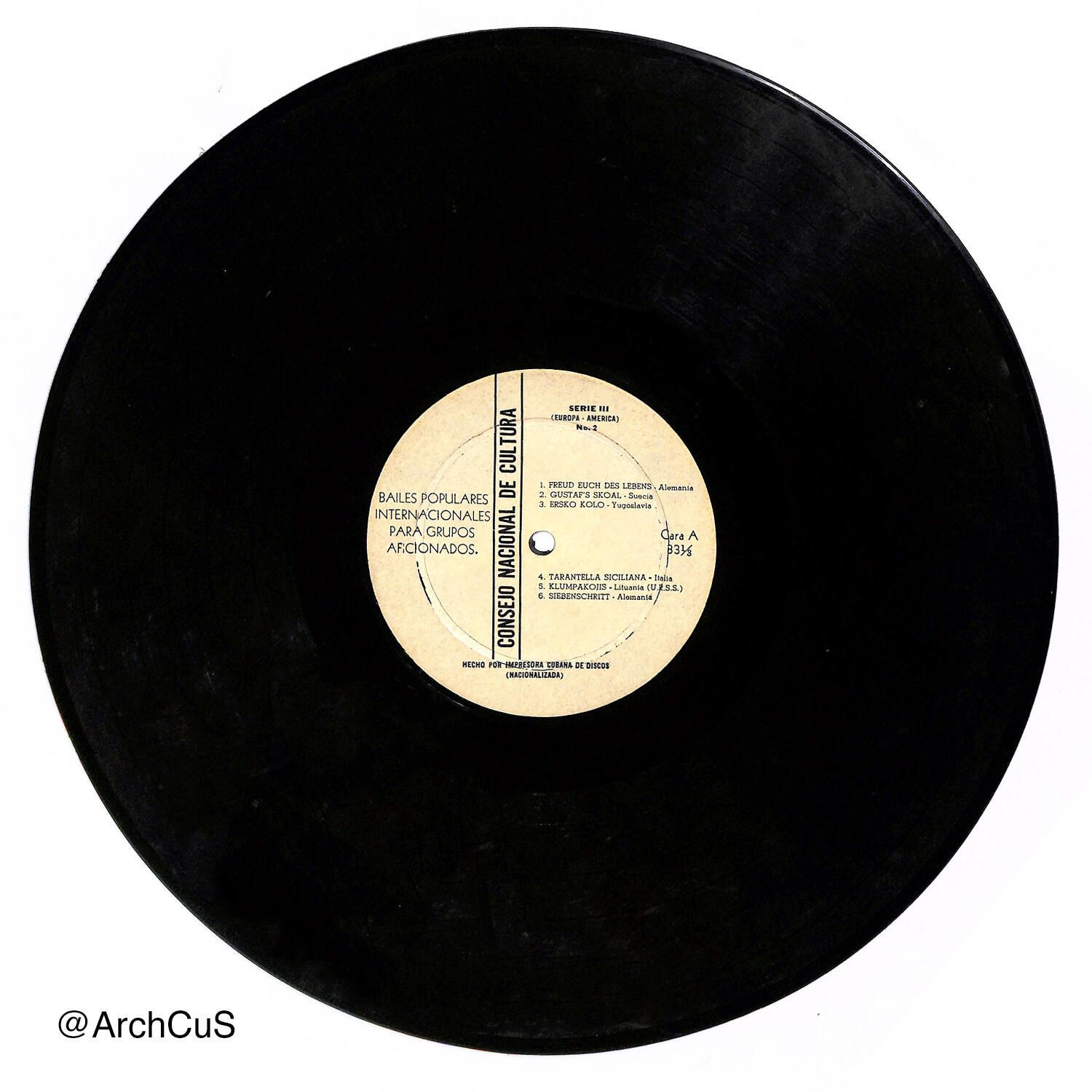
A 12-inch (33⅓ rpm) black vinyl disc with a plain cream label. The label identifies an instructional/educational record of international folk dances for amateur groups, issued by the Consejo Nacional de Cultura and pressed by the nationalized Cuban record plant.
2025.1.206
LP collection of Leopoldo Arús Gálvez
33 RPM Record
The Cabrera Arús family collection
Leopoldo Arús Gálvez collection
2025.1
Consejo Nacional de Cultura
Director
Impresora Cubana de Discos
Consejo Nacional de Cultura
Date: Circa early-to-mid 1960s (tentative). The "Impresora Cubana de Discos (Nacionalizada)" imprint points to the period soon after the nationalization of Cuban record pressing (early 1960s), and the Consejo Nacional de Cultura operated 1961–1976; together these bracket the disc to the early/mid-1960s. No explicit date on the label; flagged tentative.
Freud euch des Lebens
Gustaf's skoal
Ersko kolo
Tarantella Siciliana
Klumpakojis
Siebenschritt
Sicilian circle
Circassian circle
Meitschi putz
Czardas - Vengerka
Kujawiak
Krakowiak
Little man in a fix
"CONSEJO NACIONAL DE CULTURA"; "BAILES POPULARES INTERNACIONALES PARA GRUPOS AFICIONADOS."; "SERIE III (EUROPA-AMERICA) No. 2"; "Cara A"; "33⅓"; "HECHO POR IMPRESORA CUBANA DE DISCOS (NACIONALIZADA)." Side A track list: 1. "Freud euch des Lebens" (Alemania); 2. "Gustaf's Skoal" (Suecia); 3. "Ersko Kolo" (Yugoslavia); 4. "Tarantella Siciliana" (Italia); 5. "Klumpakojis" (Lituania, U.R.S.S.); 6. "Siebenschritt" (Alemania).
vinyl
Good
EGREM
Leopoldo Arús Gálvez
owner
Havana
Cuba
Caribbean
Central America
production, acquisition
This is an educational folk-dance record from the Consejo Nacional de Cultura — part of a numbered series for amateur dance groups — and its "Nacionalizada" imprint reflects the early-1960s nationalization of the record industry (pre-EGREM). The folk-dance program (German, Swedish, Yugoslav, Italian, Lithuanian/USSR selections) also reflects the socialist-bloc cultural orientation.