
Set of Three Damask Dinner Napkins
Textile
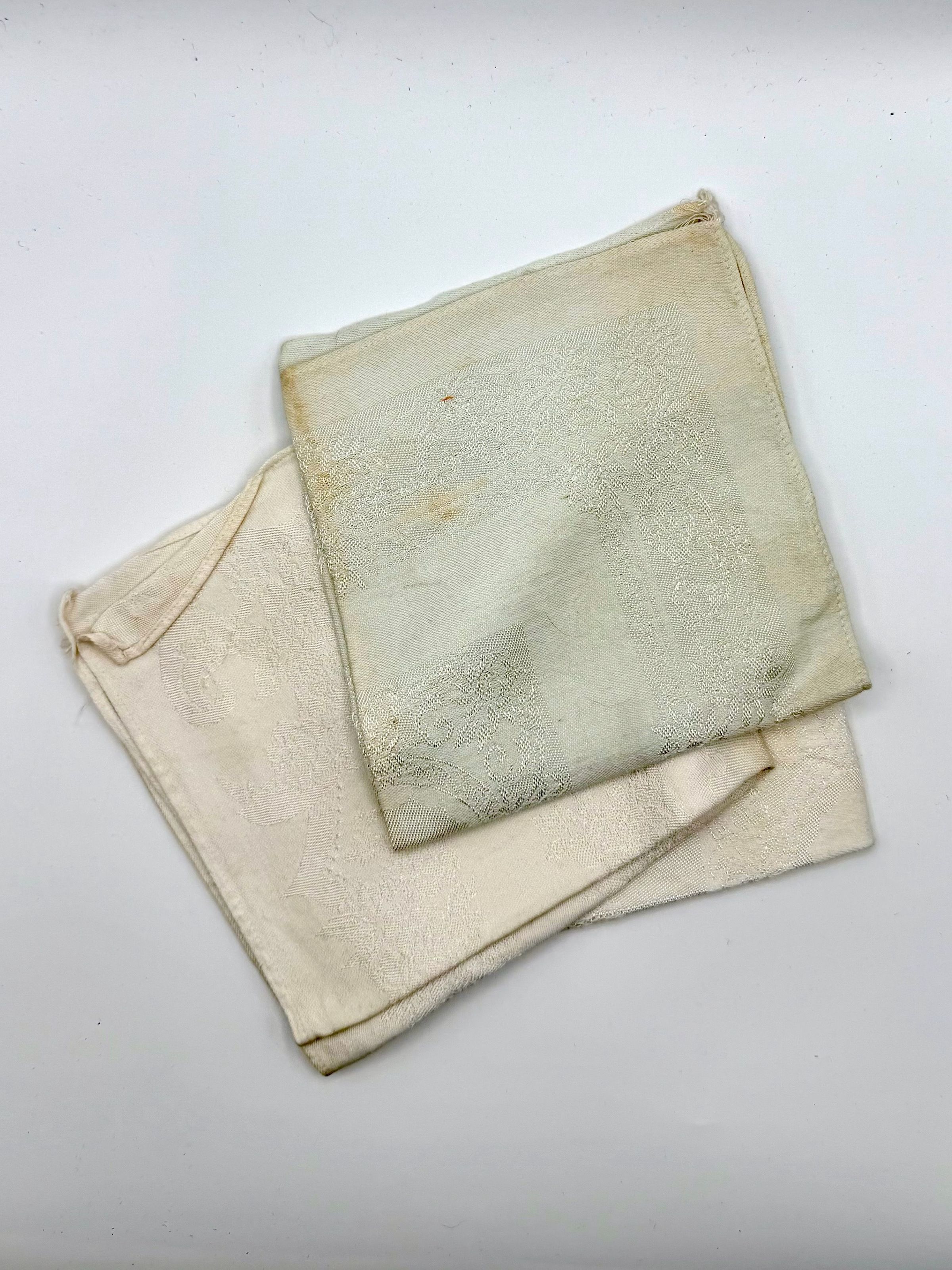
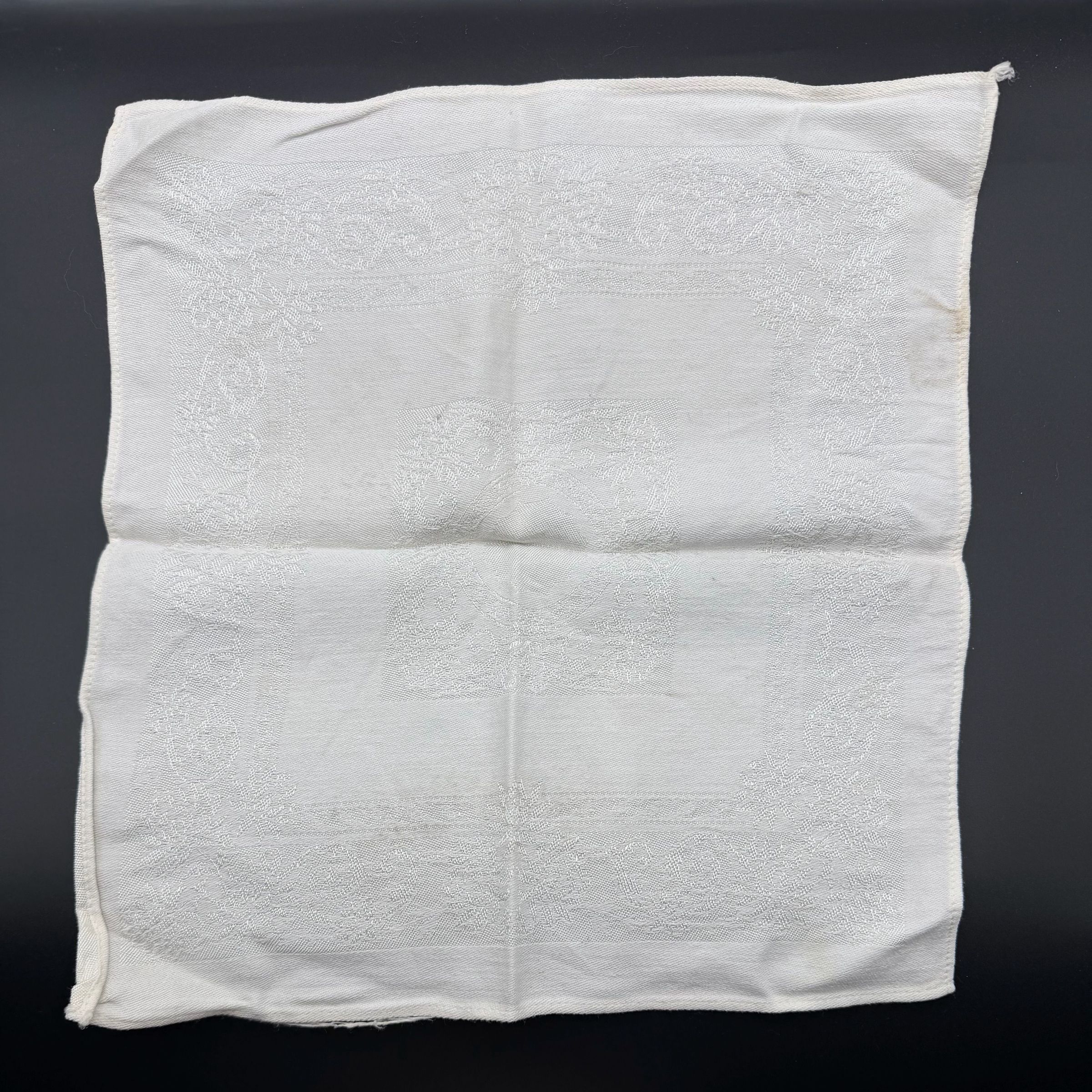
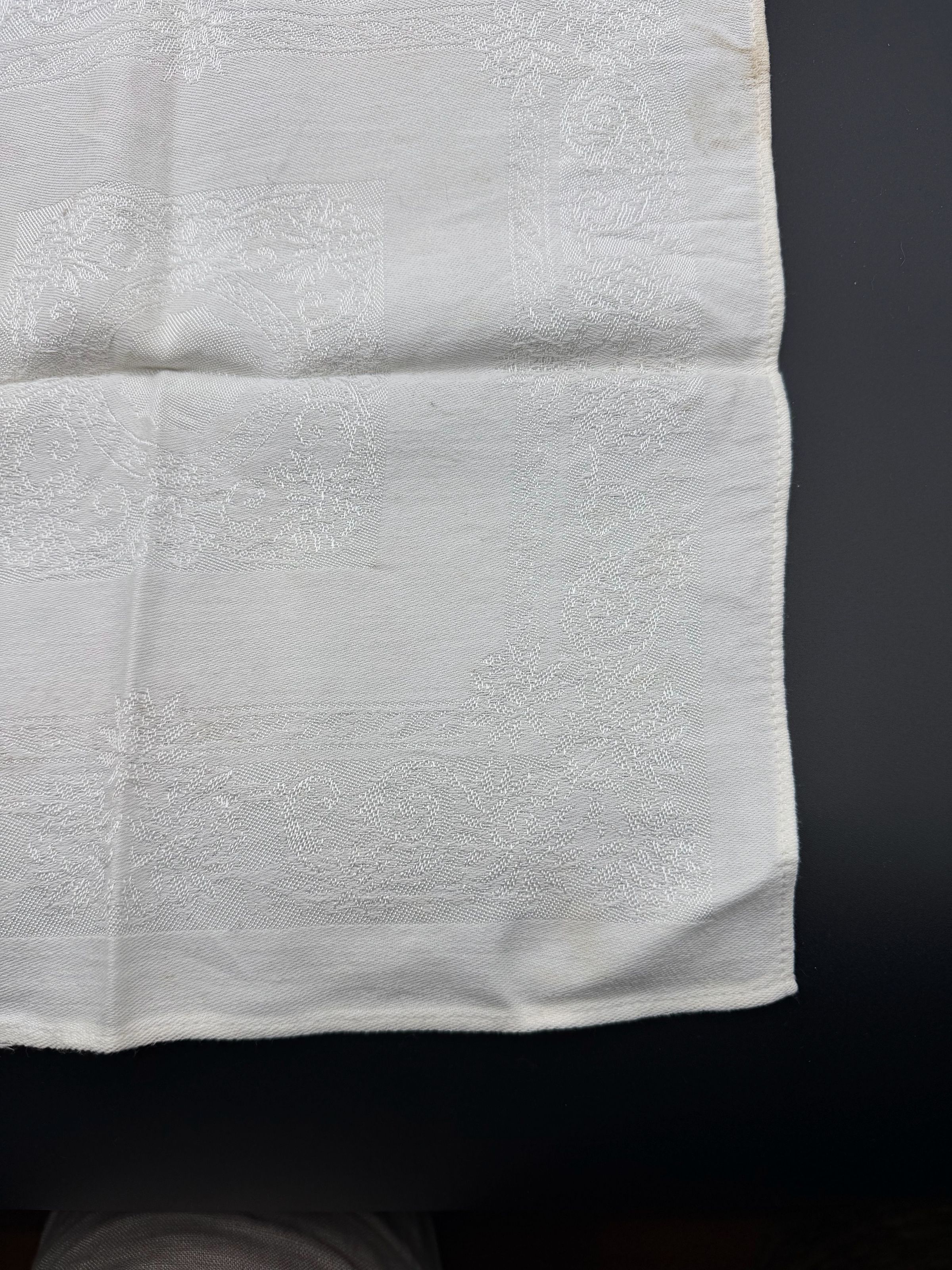
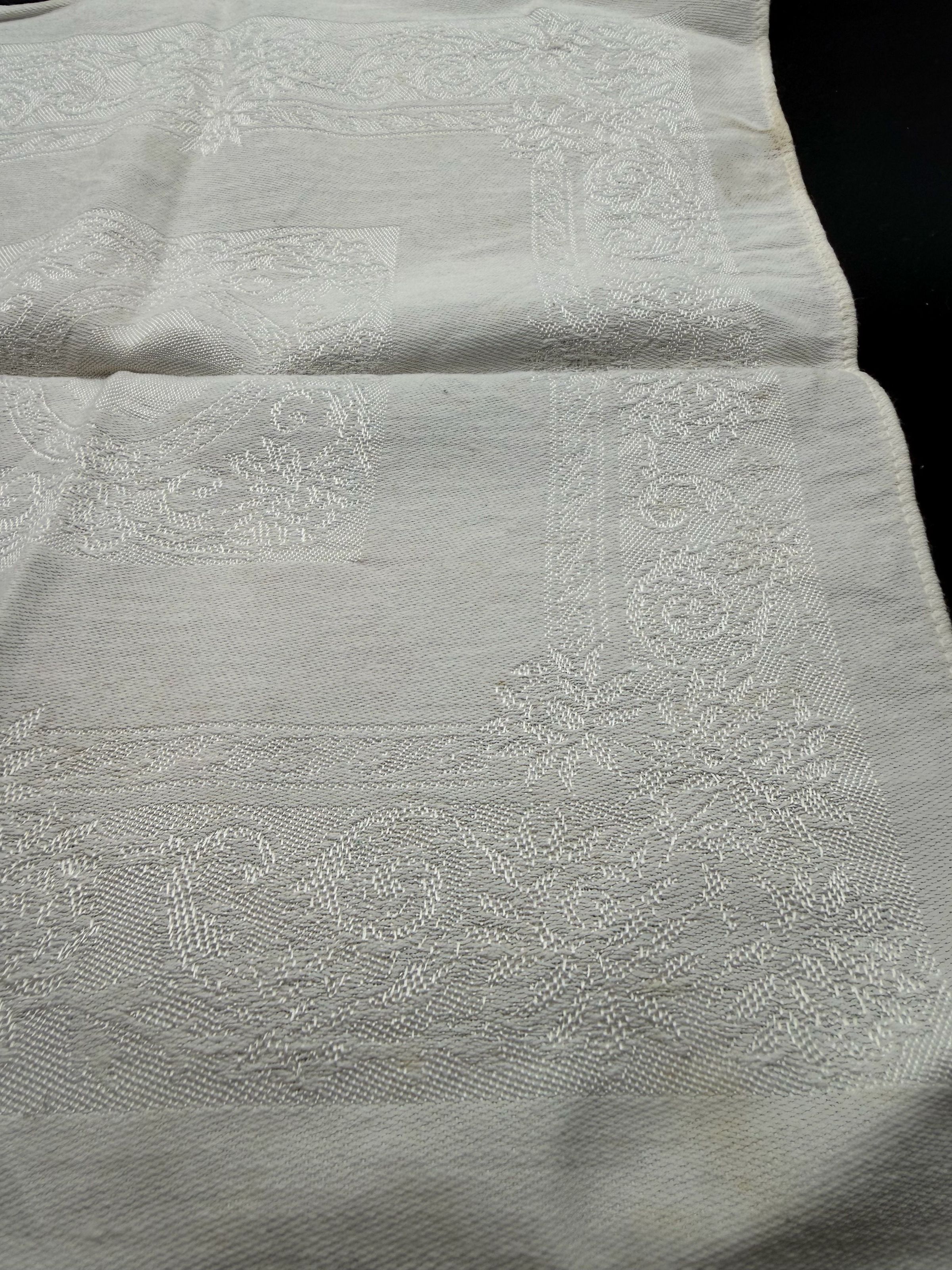
Three square dinner napkins woven in a self-patterned (tone-on-tone) damask construction. Two napkins (hereafter A and B) are off-white/ivory; a third (C) is a noticeably cooler silvery blue-gray tone, visible when all three are shown stacked together. All three share the same general woven structure and scale, suggesting they were acquired as a set or similar set. The napkins display an elaborate multi-zone border design: a wide outer band featuring stylized palm-and-floral sprays alternating with scrolling arabesques; a narrower intermediate band of repeating diamond-and-scroll chain; and a plain inner margin. The central field carries a large symmetrical medallion formed by two mirrored C/S-scroll cartouches enclosing a floral or leafy fill. The pattern repeats in the characteristic damask fashion: areas that read as satin-weave highlights on the face reverse to matte on the back.
2025.1.393
Belonged to Gertrudis Caraballo Gálvez
Formal damask table linens were a standard marker of middle-class domestic life in pre-revolutionary Cuba and continued to be used and preserved by Cuban households well into the post-1959 period. Under the rationing system introduced in the early 1960s, new household textiles became increasingly scarce; families typically maintained and repaired pre-existing linen stocks. When new linens did enter Cuba, they arrived primarily through the COMECON trading network (Soviet bloc).
The Cabrera Arús family collection
Gertrudis Caraballo Gálvez collecition
2025.1
Place: Unknown; possibly Czechoslovakia, East Germany, or another Soviet-bloc textile producer, or a pre-revolutionary Cuban or Spanish import (tentative).
Three napkins. Whether C is truly a set-mate of A and B, or a separate but related piece, cannot be confirmed.
Fabric
Woven textile; fiber content unconfirmed — likely cotton, linen, or cotton-rayon blend (tentative; fiber identification requires tactile examination or burn/microscopy test). The cooler tone and sheen of napkin C raises the possibility of a rayon or synthetic.
Good
Gertrudis Caraballo Gálvez
owner
Havana
Cuba
Caribbean
Central America
use
A burn test or microscopy sample from a loose thread would confirm cotton vs. linen vs. rayon — relevant both for conservation and for probable origin (Soviet-bloc rayon-damask production was common in the 1960s–70s). The double-scroll cartouche medallion warrants further iconographic comparison; matching it to known mid-century damask pattern books may help narrow the region of manufacture.