
"Krasno" Vacuum Food Jar (3/4 Litre)
Object/Artifact
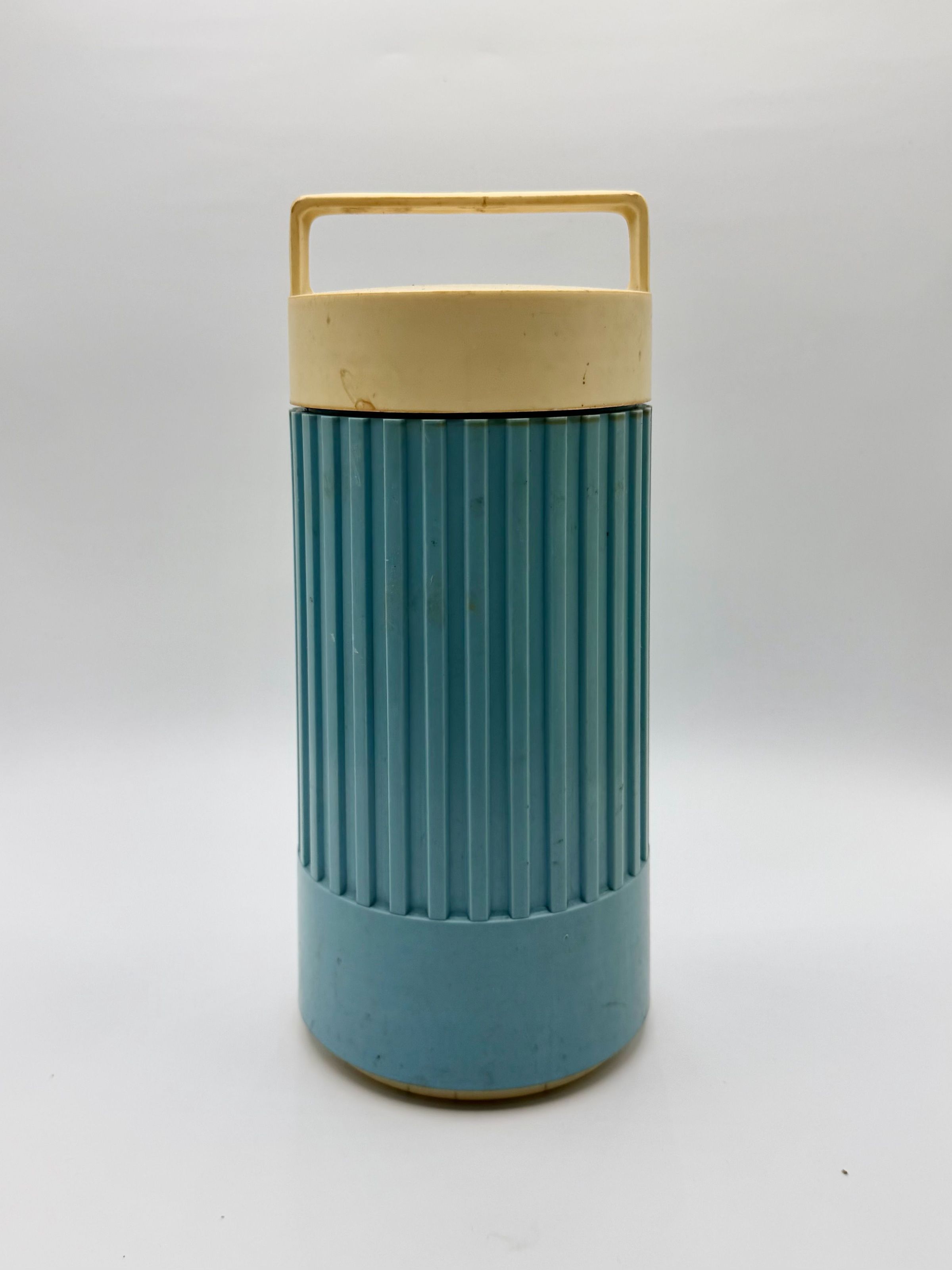
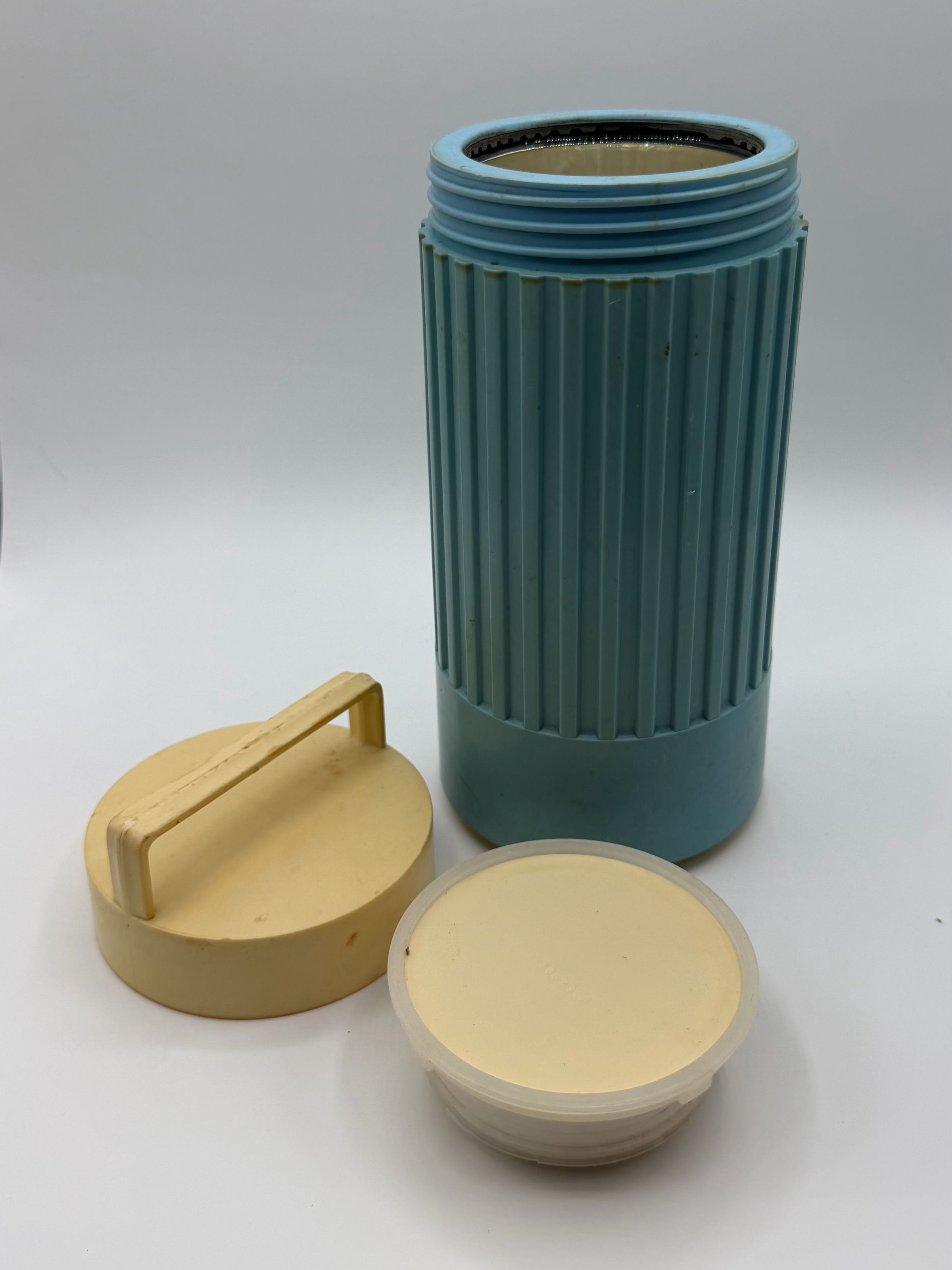
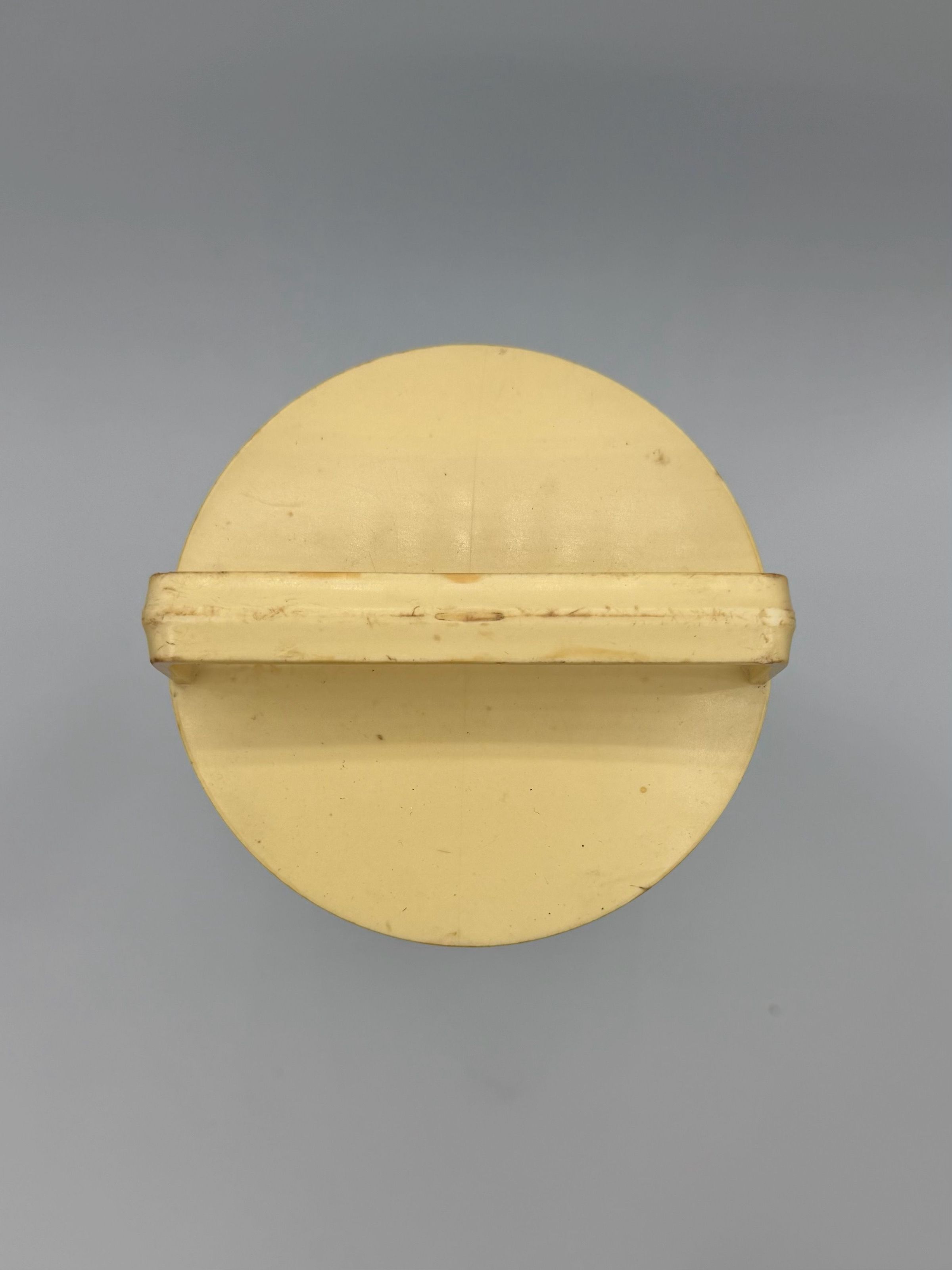
SUMMARY: A 3/4-litre Czechoslovak vacuum-insulated food jar ("jídlovka" / vacuum jar) by the state glass-industry conglomerate Sklo Union, branded "Krasno," in light-blue and cream plastic with a Bohemian-glass vacuum insert. Includes the complete original printed cardboard box. Made at the Sklo Union Vsetín plant under the Valašské Meziříčí concern, post-1965. DESCRIPTION: A cylindrical vacuum-insulated food jar (Czech "jídlovka," literally "food-keeper") in two-tone plastic. The outer body has a tall fluted/ribbed light-blue plastic mid-section with a plain (un-ribbed) cylindrical light-blue base; the top closure is a cream-white plastic screw cap with an integral arched carrying handle. Inside, the jar contains a silvered Bohemian-glass vacuum-flask insert, seated within the plastic outer shell. A second interior cap is present separately. The construction is the classic double-walled silvered-glass Dewar flask housed inside a plastic protective shell, with screw-thread closure. The jar is presented with its complete original printed cardboard box.
 "Krasno" Vacuum Food Jar (3/4 Litre)
 "Krasno" Vacuum Food Jar (3/4 Litre) - Image 2
 "Krasno" Vacuum Food Jar (3/4 Litre) - Image 3
 "Krasno" Vacuum Food Jar (3/4 Litre) - Image 4
 "Krasno" Vacuum Food Jar (3/4 Litre) - Image 5
 "Krasno" Vacuum Food Jar (3/4 Litre) - Image 6
 "Krasno" Vacuum Food Jar (3/4 Litre) - Image 7
 "Krasno" Vacuum Food Jar (3/4 Litre) - Image 8
2025.1.238
The Cabrera Arús family collection
2025.1
Sklo Union
Valašské Meziříčí
Vsetín plant
OLPA Opava
MAKER: Sklo Union, concern enterprise at Valašské Meziříčí; manufactured and supplied by the Vsetín plant ("závod Vsetín"). Box printed by OLPA Opava (printer's mark "321 OLPA OPAVA"). Brand name: Krasno. DATE / PERIOD: Most likely 1970s, into the early 1980s, based on packaging design and plastic typology.
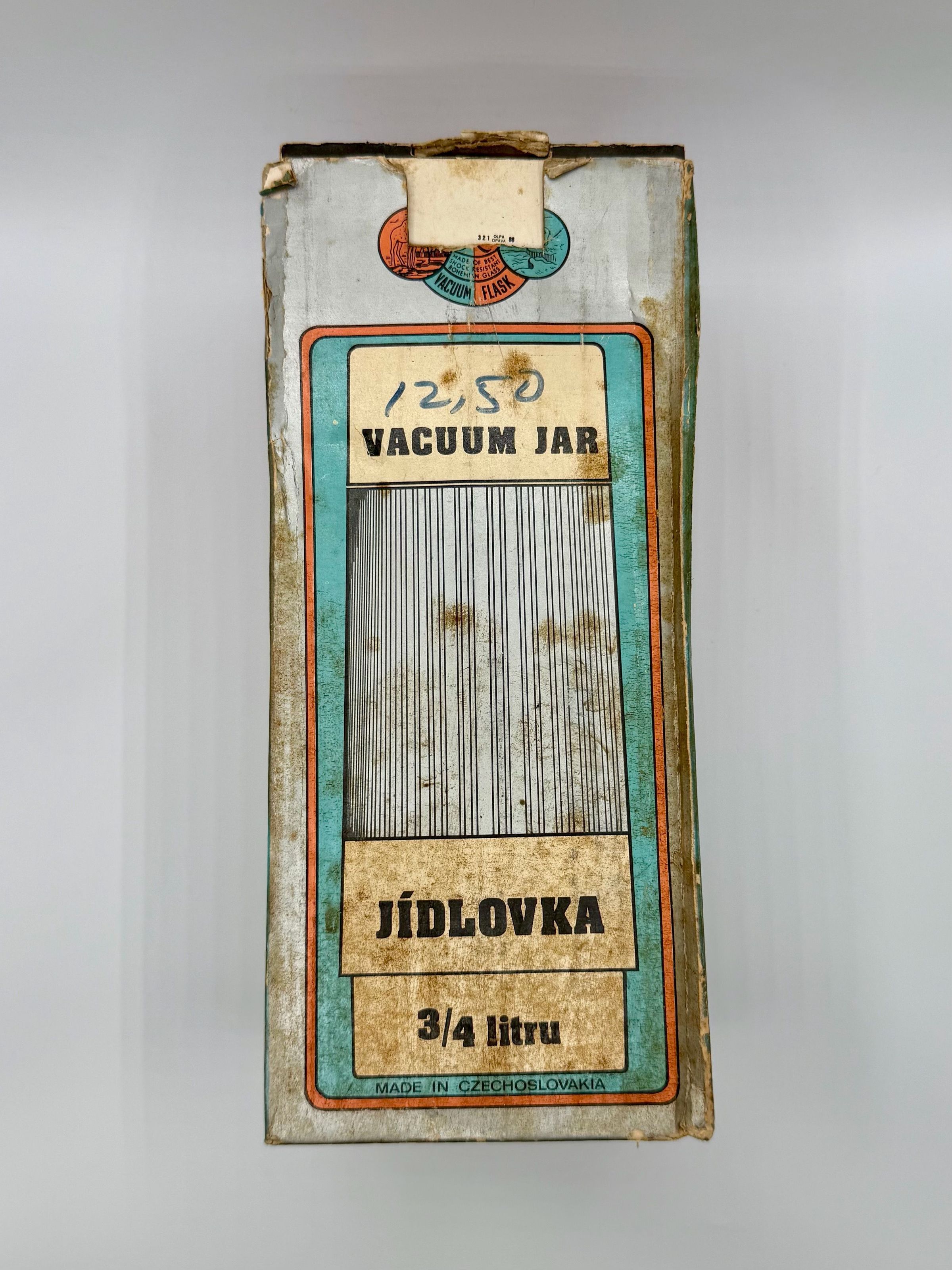
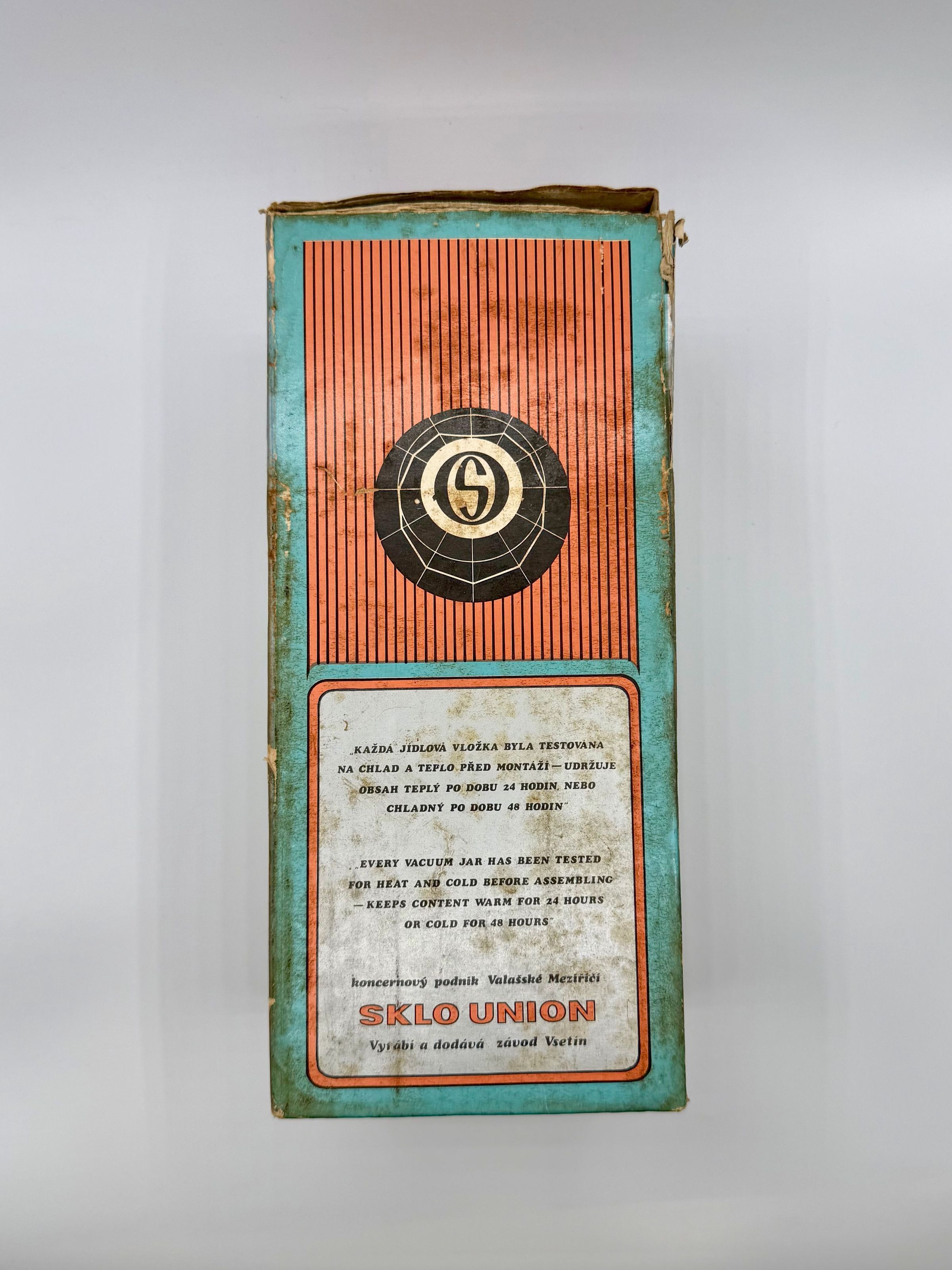
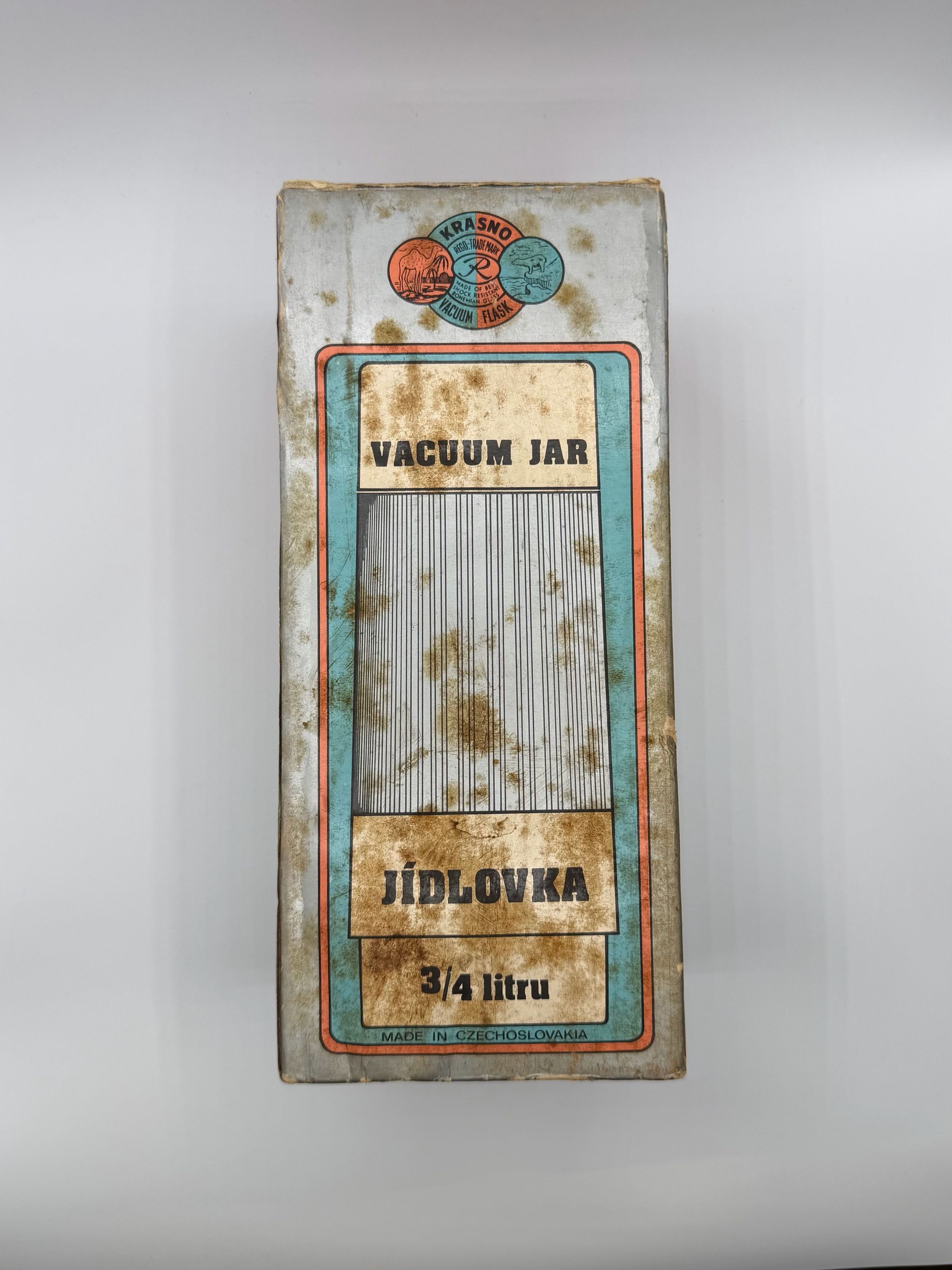
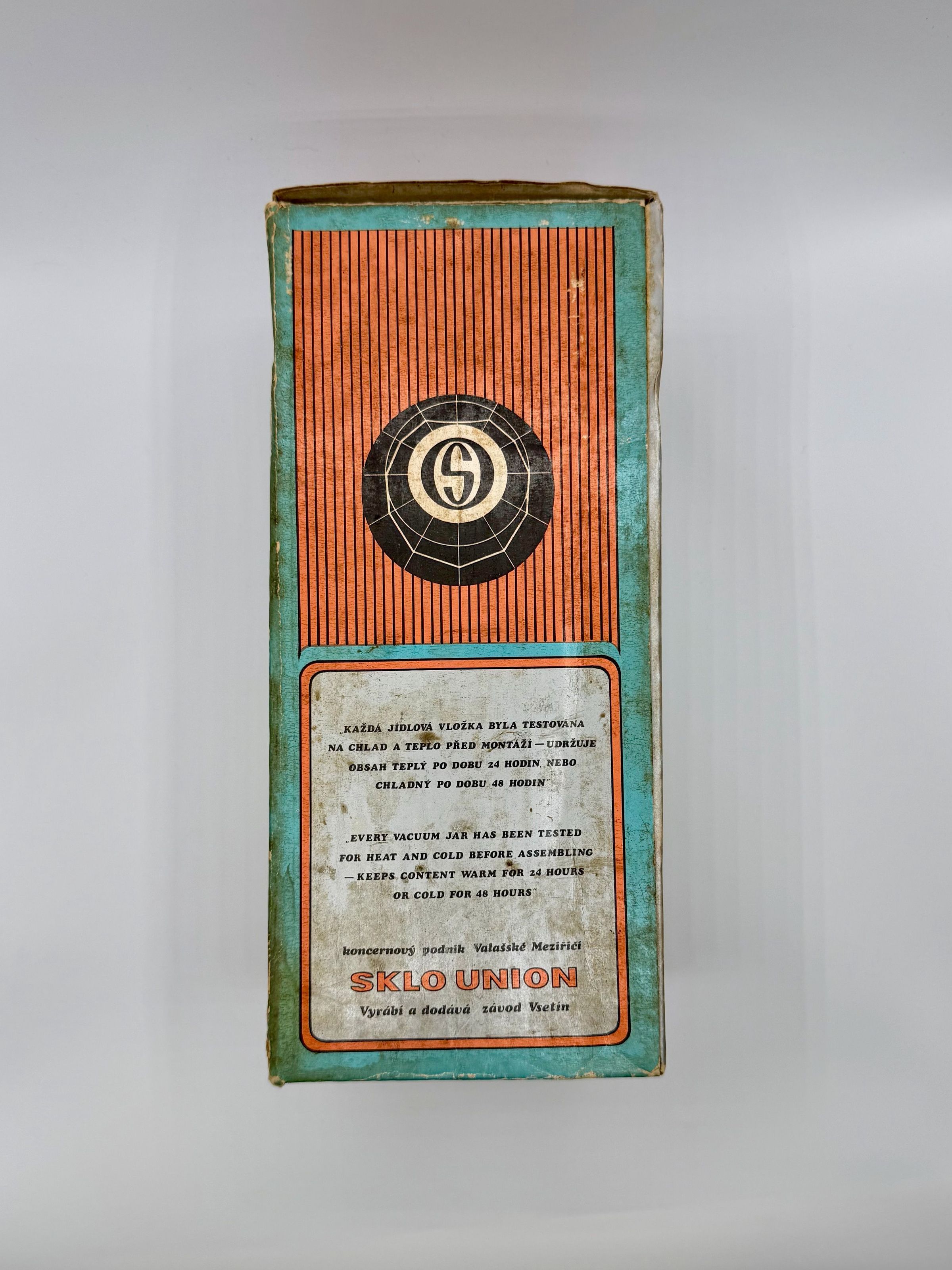
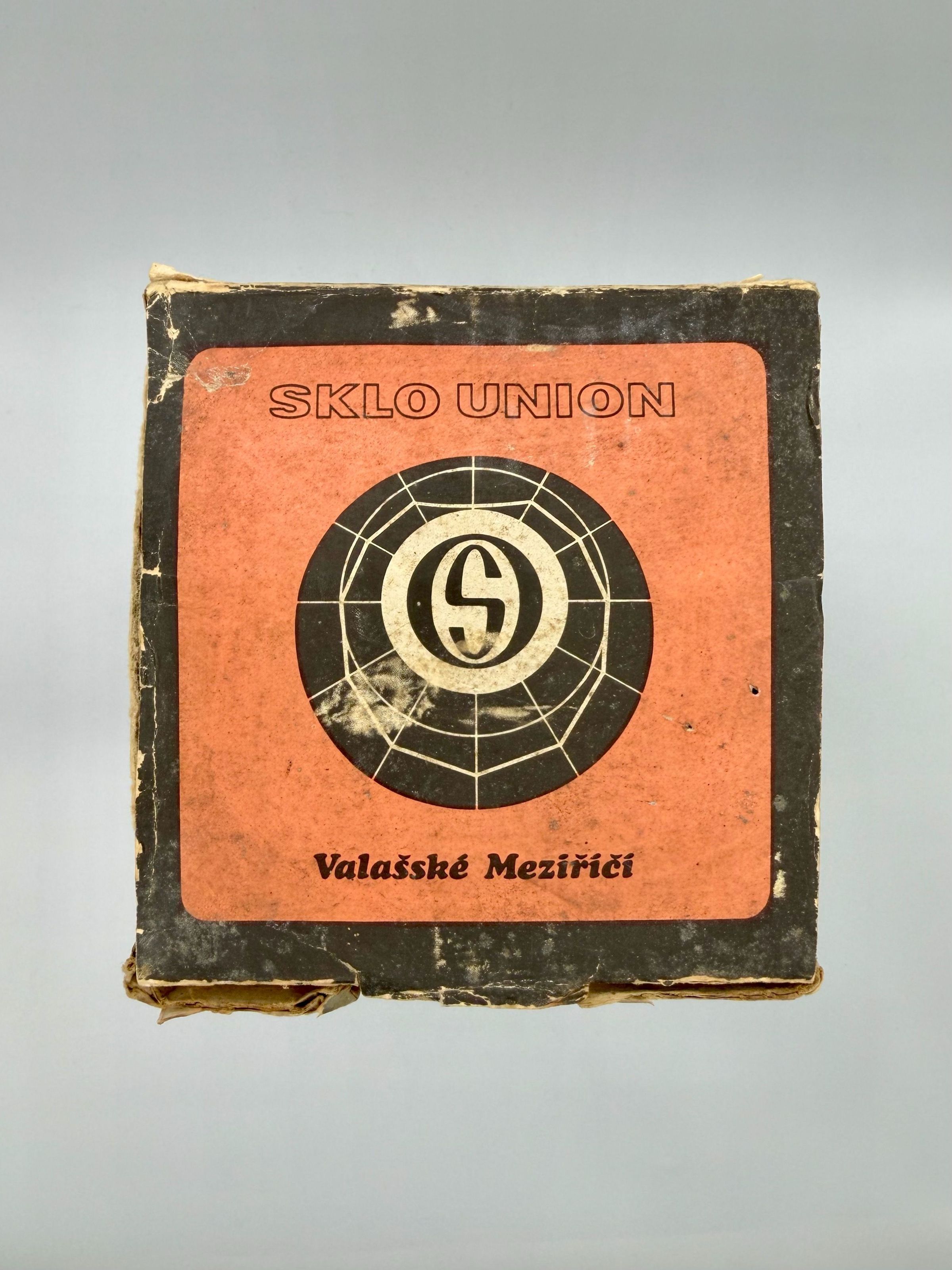
Front of box (transcribed): - "VACUUM JAR" / "JÍDLOVKA" / "3/4 litru" / "MADE IN CZECHOSLOVAKIA" - Small oval Krasno trademark medallion at the top with camel and penguin: "KRASNO / REGD. TRADE MARK / R / MADE OF BEST SHOCK RESISTANT BOHEMIAN GLASS / VACUUM FLASK" - Handwritten ink note "12,50" on a paper label at top (price) Back of box (transcribed): - Sklo Union "SU" geodesic-globe trademark - Czech text: "KAŽDÁ JÍDLOVÁ VLOŽKA BYLA TESTOVÁNA NA CHLAD A TEPLO PŘED MONTÁŽÍ – UDRŽUJE OBSAH TEPLÝ PO DOBU 24 HODIN, NEBO CHLADNÝ PO DOBU 48 HODIN" - English translation: "EVERY VACUUM JAR HAS BEEN TESTED FOR HEAT AND COLD BEFORE ASSEMBLING – KEEPS CONTENT WARM FOR 24 HOURS OR COLD FOR 48 HOURS" - "koncerový podnik Valašské Meziříčí / SKLO UNION / Vyrábí a dodává závod Vsetín" Top (end panel): "SKLO UNION / Valašské Meziříčí" with Sklo Union geodesic logo Inside flap stamp: "321 OLPA OPAVA" with clover-shape symbol (printer's mark) Languages on packaging: Czech and English (bilingual).
box, bottle, 2 caps
Plastic
Cardboard
Glass
MATERIALS: Light-blue and cream-white injection-moulded plastic (likely polystyrene or polypropylene); silvered double-walled borosilicate / soda-lime Bohemian glass (vacuum insert); printed cardboard (box); printed inks TECHNIQUES: Injection-moulded plastic shell with fluted exterior; double-walled silvered-glass vacuum flask insert (classic Dewar construction); offset-printed cardboard packaging
Good
Leopoldo Arús Gálvez
owner
Havana
Cuba
Caribbean
Central America
use
The "jídlovka" (Czech: literally "food-keeper") is the Czechoslovak vacuum-insulated container for hot or cold food — a thermos for solid or semi-solid contents rather than for liquids. It uses the same double-walled silvered-glass vacuum technology as the conventional thermos but is shaped with a wide, short interior to hold things like soup, stew, or chilled puddings rather than just coffee or tea. The "Krasno" brand was Czechoslovakia's well-known domestic line of these products. "Krasno" — Czech for "beautiful" — was the brand name for Czechoslovak vacuum flasks aimed at both domestic and export markets. The oval medallion on this box, with its camel and penguin paired across a globe, is the trademark's visual signature: the camel represents heat retention (it can survive the desert), the penguin represents cold retention (it lives at the poles) — together symbolizing the flask's bidirectional thermal performance. The phrase "MADE OF BEST SHOCK RESISTANT BOHEMIAN GLASS / VACUUM FLASK" claims the prestige of Bohemian glassmaking (a centuries-old Czech specialty with international cachet).
The packaging is bilingual Czech/English. It indicates the box was designed for both the domestic Czechoslovak market and Anglophone or general export — not specifically for Cuba or Latin America. Cuba's Czechoslovak imports typically used either the maker's standard export packaging (with English) or, less commonly, packaging with Spanish overprints. The absence of Spanish on this box suggests the jar entered Cuba either: (a) through Cuban state import channels using the standard export box (with the price-tag "12,50" perhaps added by the Cuban retail store in Cuban pesos), or (b) as personal luggage brought back to Cuba by a Cuban traveler to Czechoslovakia — a possibility especially plausible given that this same collection includes other Czechoslovak-connected family material (Leopoldo Arús Caraballo traveled to Czechoslovakia for his work with the Cuban electrical utility). If Leopoldo brought this jar back personally from a Czechoslovak trip, the box and the price tag take on a different meaning — perhaps the "12,50" is in Czechoslovak crowns rather than Cuban pesos.
Czechoslovakia was one of Cuba's most important socialist-bloc trading partners between 1960 and 1989 — second only to the USSR and East Germany in volume for many years. Czechoslovak exports to Cuba included industrial machinery, vehicles (Škoda, Tatra), beer-brewing equipment, glassware (including Bohemian crystal, pressed glass, and vacuum flasks), and small consumer goods. Cuban technicians and engineers (like Leopoldo Arús Caraballo) traveled to Czechoslovakia for training, and a steady stream of Czechoslovak goods entered Cuban households both through state distribution (the network of state retail stores) and as personal items brought back by Cuban travelers.
See Marcus Newhall, "Sklo Union: Art Before Industry" (the major reference work on Sklo Union, with extensive product catalogues; the book covers the history of the conglomerate and includes 4,500+ documented pieces with a searchable CD-ROM database)