
"SIlva" drink coaster, turned-wood — set of four
Object/Artifact
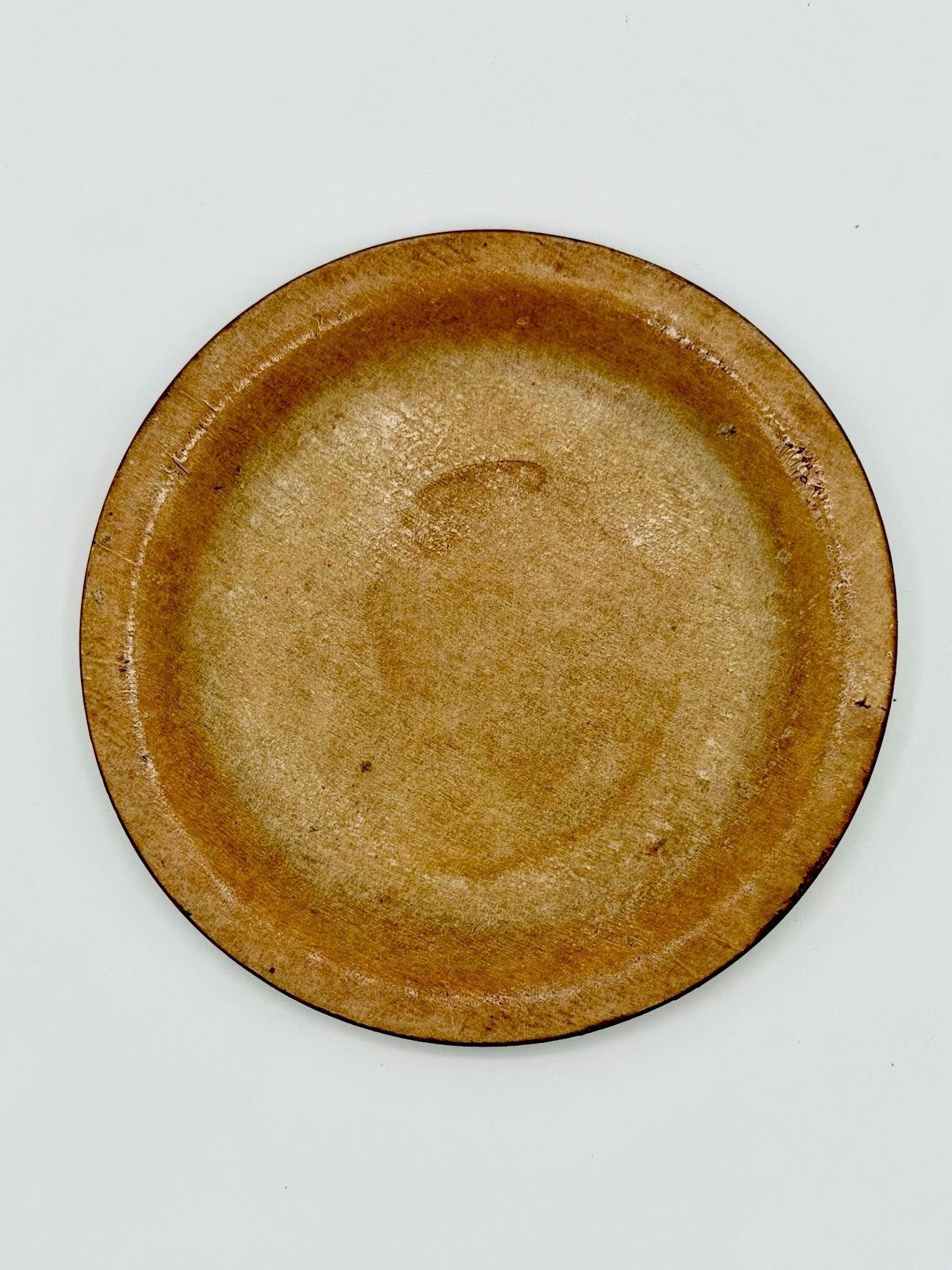
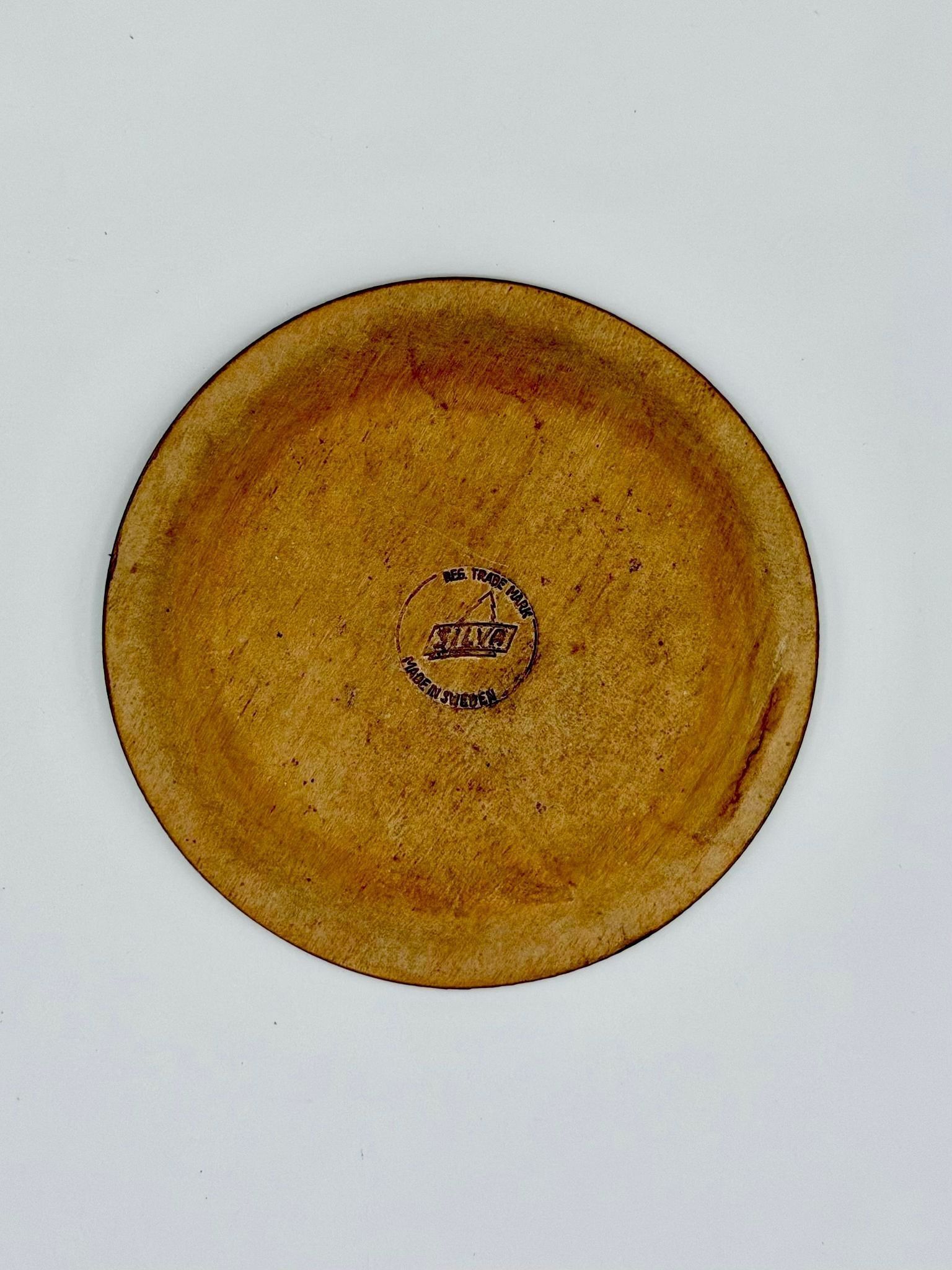
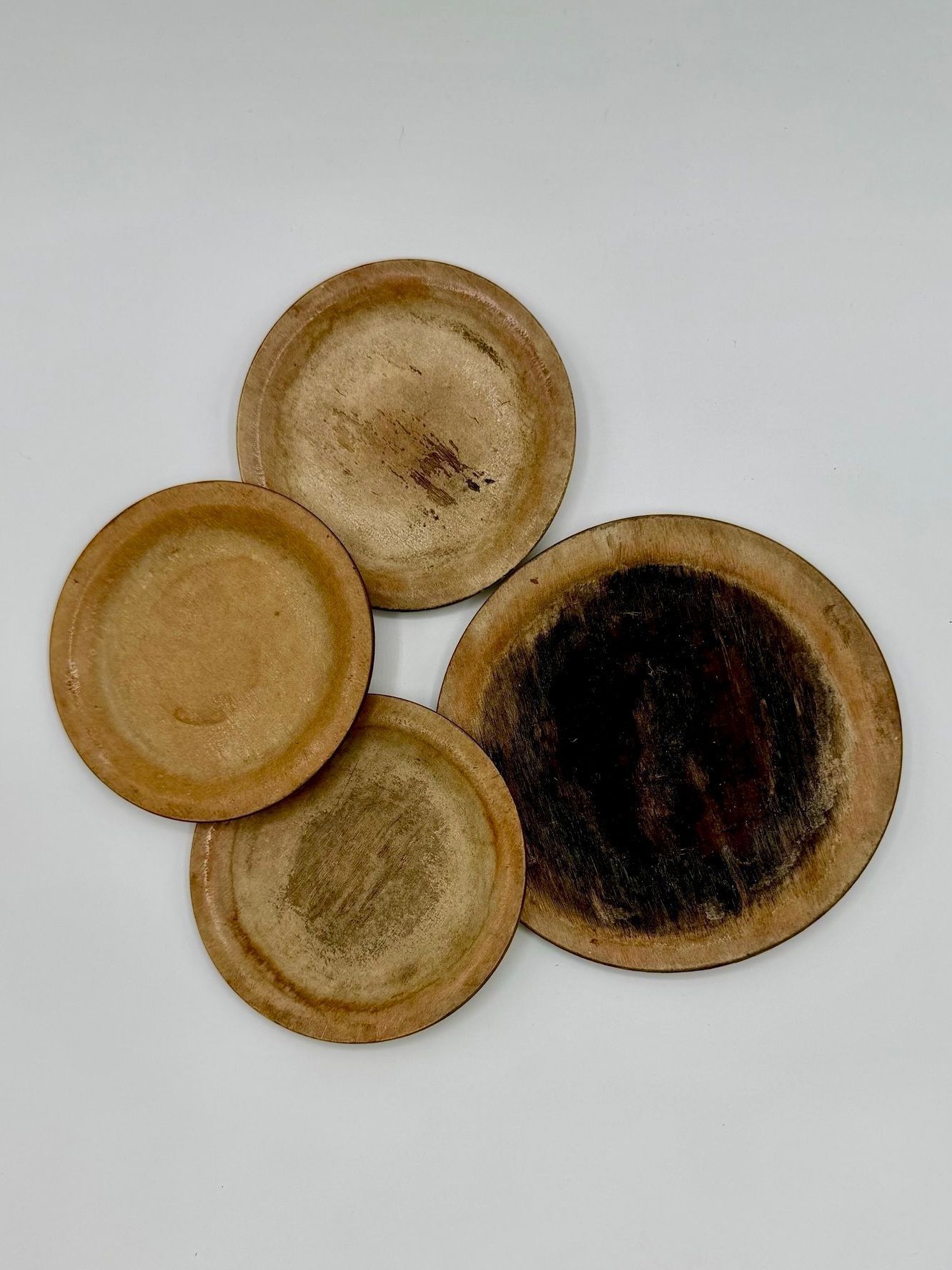
A set of four small, shallow turned-wood coasters (drink/glass coasters), each a low circular dish with a flat well and a slightly raised rim. The wood is a pale-to-tan close-grained hardwood (birch or similar), finished with a clear sealing coat; surfaces show lathe-turning marks and, on several, water staining, darkening, and one piece heavily scorched/darkened across the well. The underside of at least one coaster is stamped with a circular maker's mark: a triangle device within "REG. TRADE MARK / SILVA / MADE IN SWEDEN." No decoration beyond the wood finish. The four are uniform in form and size, consistent with a manufactured matched set.
2025.1.155
Belonged to José A. Cabrera Pérez
The Cabrera Arús family collection
José A. Cabrera Pérez collection
2025.1
Silva
1960s
Date: circa 1960s (tentative). Comparable Silva wood serveware is generally dated to the mid-century/1960s, which would place the set in range; the mark alone does not fix a year, and a 1950s (pre-1959, out-of-range) origin cannot be firmly excluded (see Research Notes).
Underside circular stamp: triangle device; "REG. TRADE MARK"; "SILVA"; "MADE IN SWEDEN." (Present on at least the photographed coaster; the others to be checked for the same mark.)
Materials: Turned hardwood (pale/tan, birch or similar — species not confirmed); clear surface finish/sealant. Technique: Lathe-turned wood dish with raised rim and recessed well; clear-coated. Machine/industrially produced (matched set).
Poor
José A. Cabrera Pérez
owner
Havana
Cuba
Caribbean
Central America
use
Sweden
Europe
production
Comparable Silva wood pieces are usually dated to the 1960s (in range), but the stamp does not fix a year and a 1950s origin is not excluded; treated as plausibly in range pending firmer evidence. The Cuban presence of a Swedish import would itself be worth a provenance note (pre-1959 Western trade vs. later acquisition).