
Sewing thimble, molded plastic
Object/Artifact
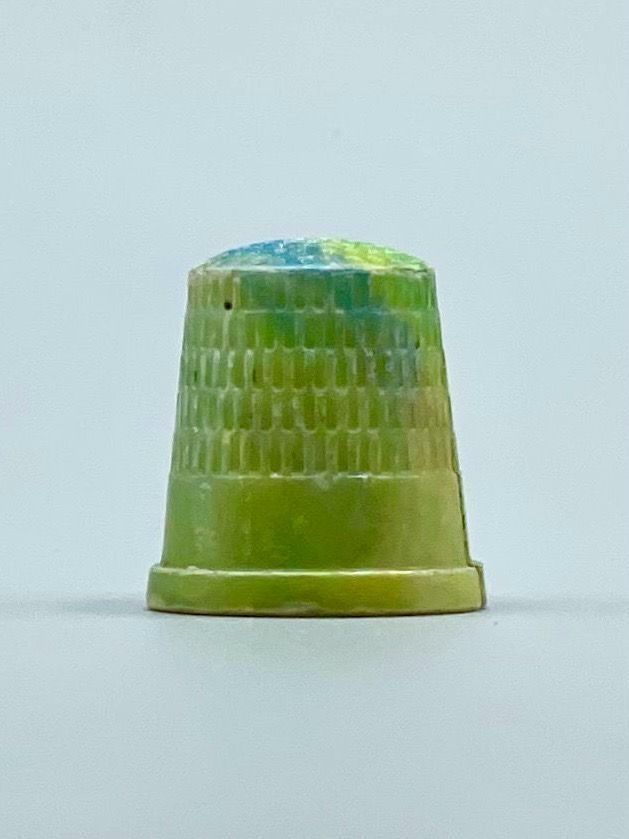
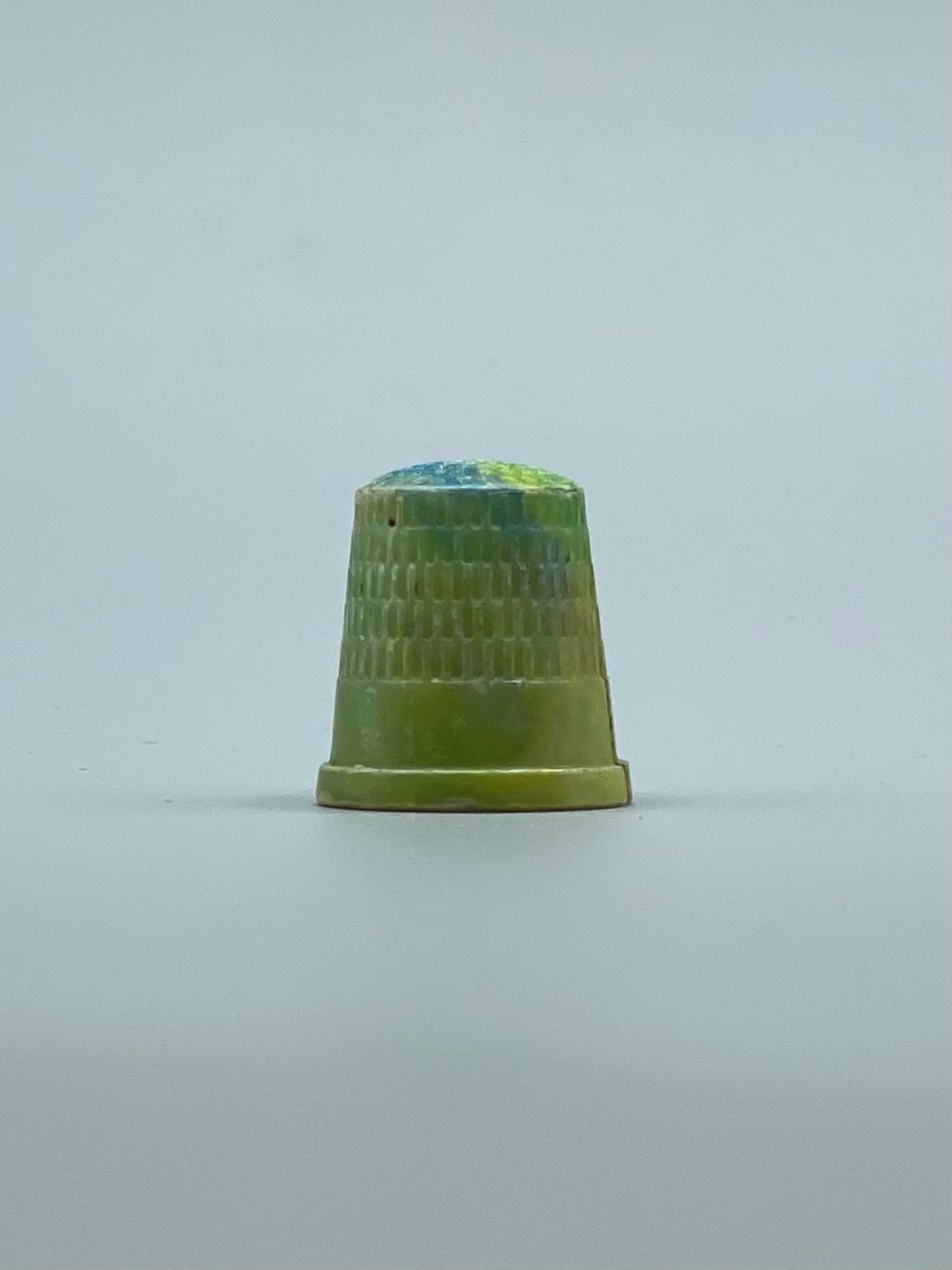
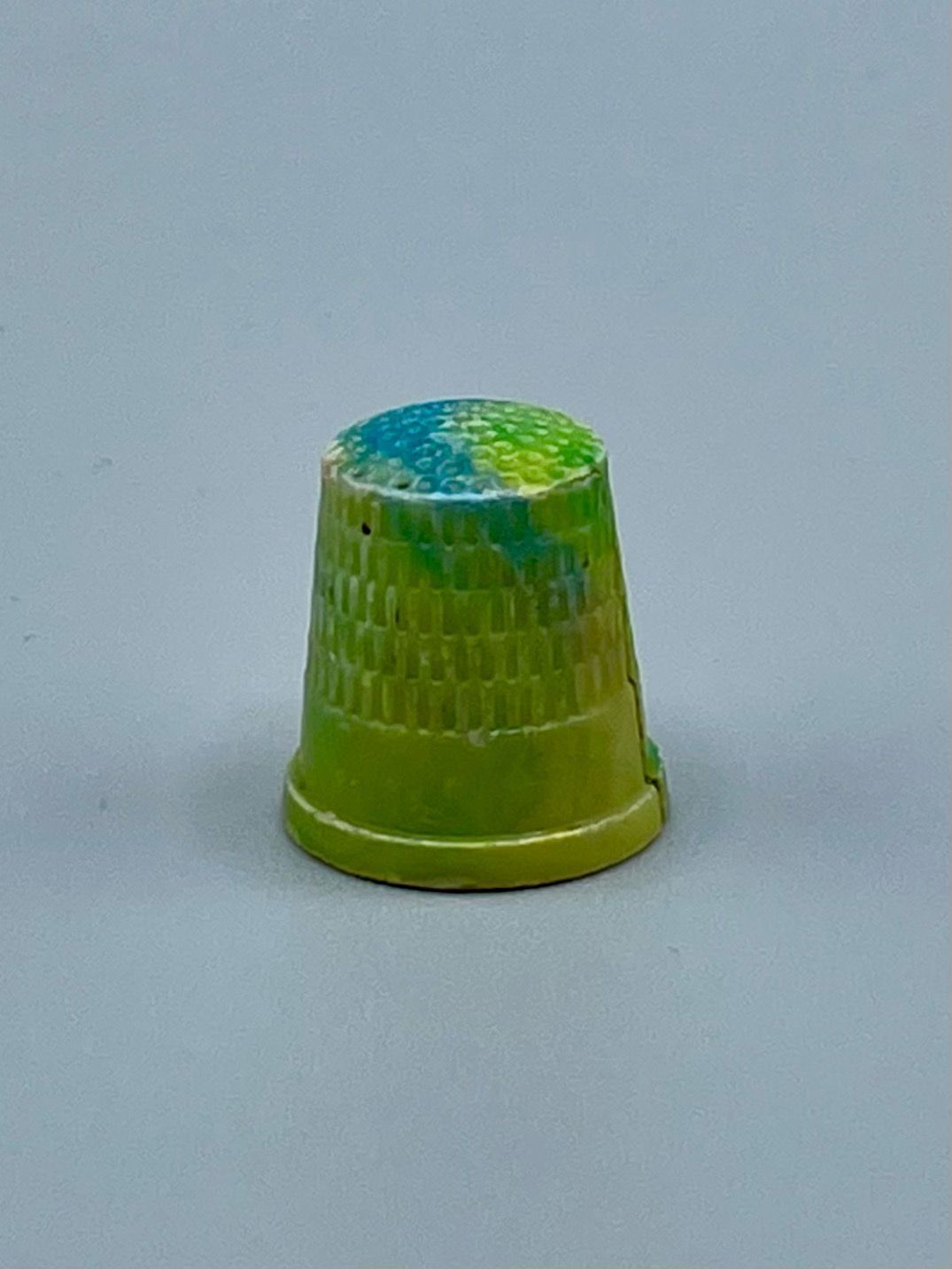
A small closed-top sewing thimble made of molded plastic in a marbled, variegated green-yellow, with blue-green and yellow mottling concentrated at the crown. The body is the standard tapering thimble form with a flat-domed top and a slightly flared band at the open base. The crown and upper sides are covered in the regular knurled indentations (the small dimples that keep a needle from slipping) typical of a working thimble; the lower body is plainer above the basal rim. The plastic has a faintly translucent, lustrous quality. There are no visible maker's marks, size numbers, or inscriptions.
2025.1.44
Gertrudis Caraballo Gálvez's sewing items.
The Cabrera Arús family collection
Gertrudis Caraballo Gálvez collecition
2025.1
Belonged to Gertrudis Caraballo Gálvez.
MAKER: Unknown. No maker's mark, size stamp, or country indication is present on the visible surfaces. DATE / PERIOD: Not marked; undetermined. An early-to-mid twentieth-century date is most likely on material grounds. If the plastic is celluloid, that points to roughly the 1900s–1940s, since celluloid began to lose favor as cheaper plastics became available in the 1930s and 1940s; other early plastics used for small sewing items extend the plausible range slightly later. ORIGIN: Unknown. Plastic thimbles of this kind were made in several countries, and nothing on the object indicates where this one was produced.
Plastic
Good
Gertrudis Caraballo Gálvez
owner
Havana
Cuba
Caribbean
Central America
use
Plastic was an established thimble material alongside metal, bone, and other substances; thimble-identification references list celluloid and plastic among the recognized categories. Early cellulose plastics were widely used for small domestic and sewing items, and celluloid in particular was valued for taking bright colors and marbled effects. General identification guidance notes that celluloid is thin and light, often translucent when held to a bright light, and gives off a camphor smell when warmed under hot water, while it is also prone to surface cracks and yellowing and is flammable. These traits, together with the marbled coloring, make celluloid the leading candidate for this thimble, but they are not conclusive. Distinguishing the exact plastic would take simple, mostly non-destructive checks on the object itself: backlighting (celluloid is often translucent even when colored); a brief warm-water sniff test (celluloid smells of camphor, casein of burnt milk, and acetate has little odor); and a sense of weight (early plastics are very light). These would confirm or rule out celluloid and refine both the material and the date.