
"Bell" Brand Folding Multi-Tool Nail Clipper (Model 709) with Knife Blade and Bottle Opener,
Object/Artifact
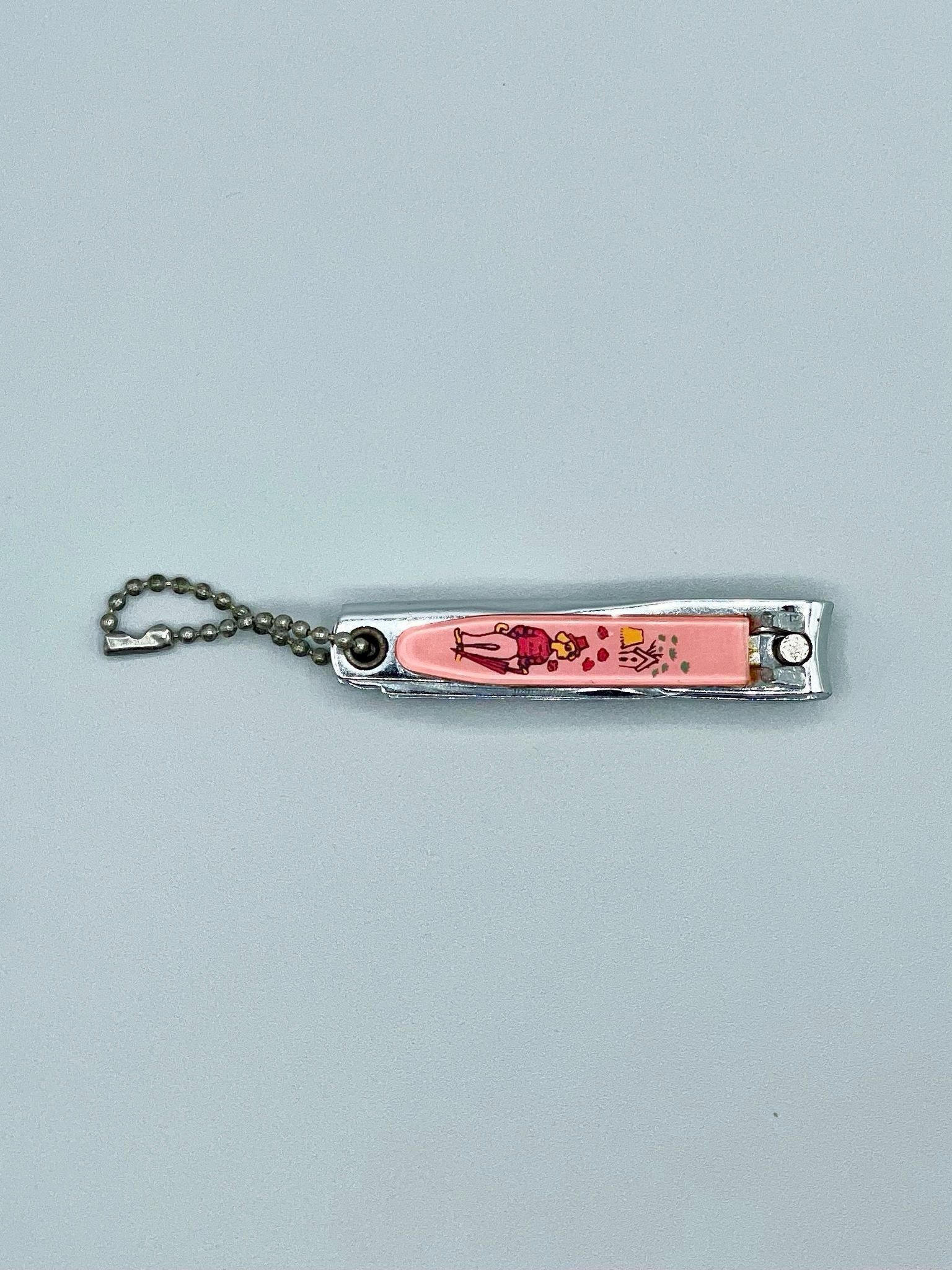
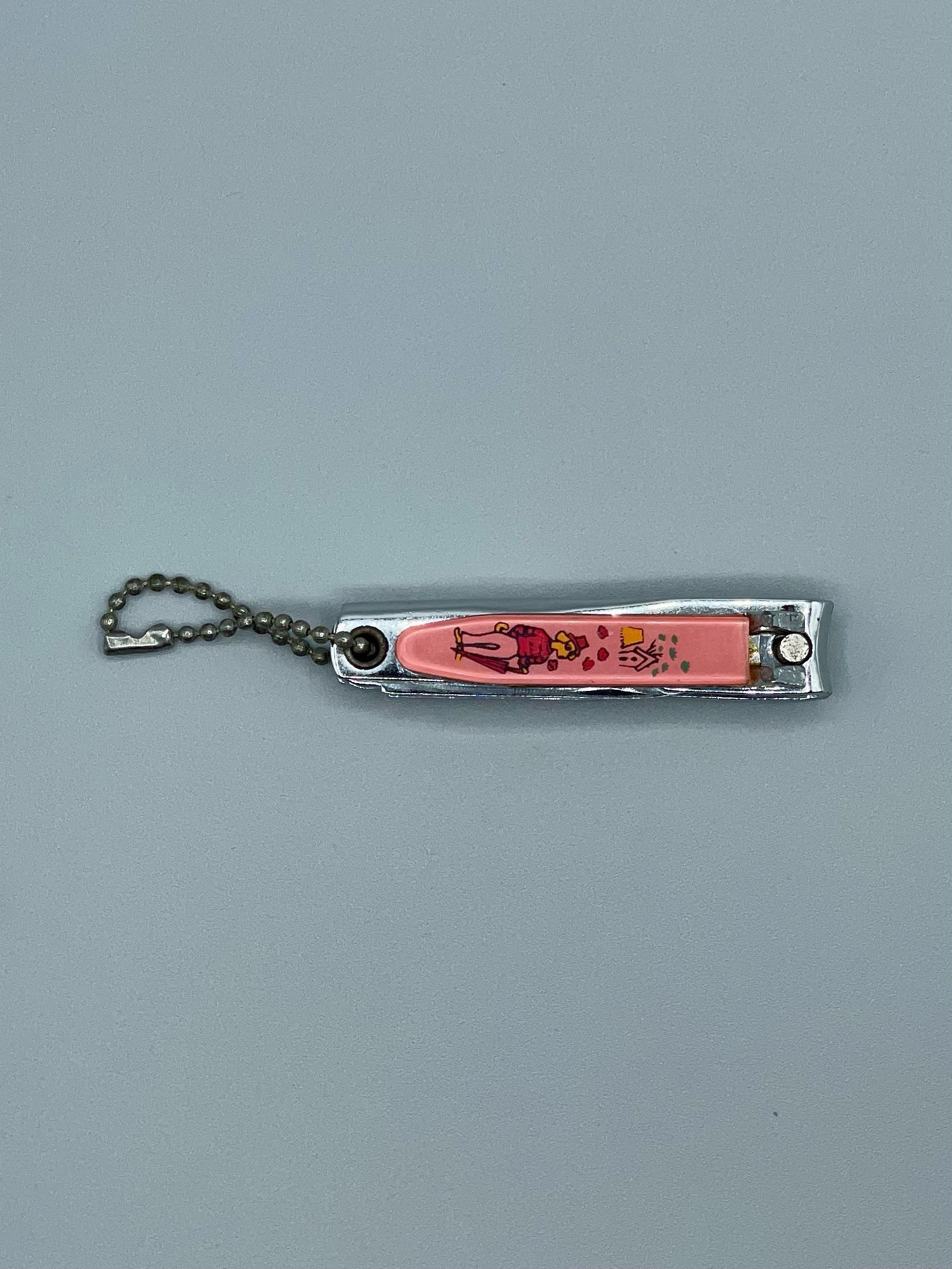
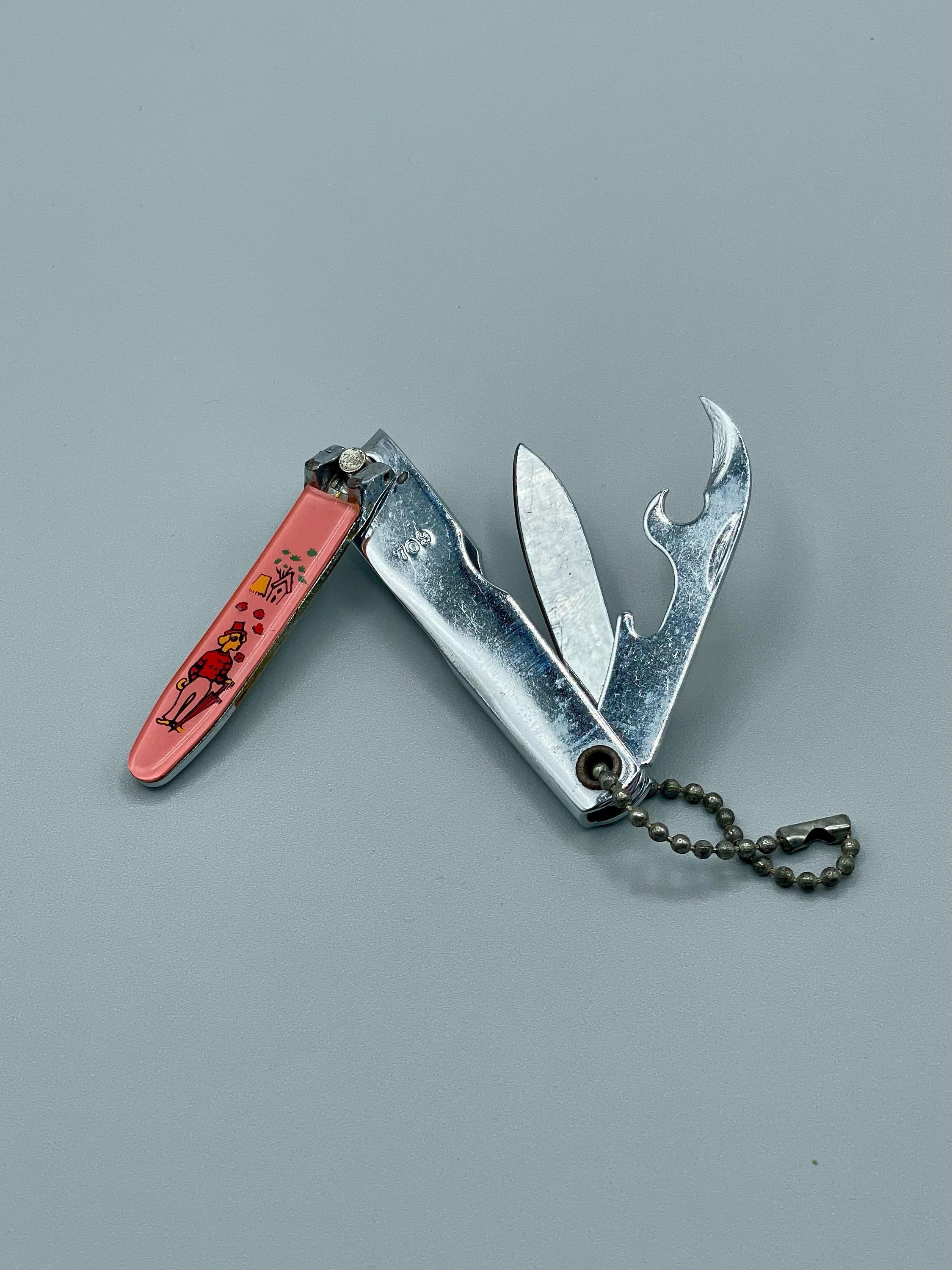
A small chrome-plated folding multi-tool combining a nail clipper, a small knife blade, and a bottle/can opener in a pocket-keychain format. Branded "Bell" with Model 709 (likely the N-709 series of South Korean manufacturer Bell Metal Co.). The clipper face carries a printed decorative pink panel with a small illustrated figure and stylized bell/flower iconography. Origin almost certainly South Korea — making this an unusual object for a Cuban family collection, since South Korea and Cuba had no diplomatic relations until 2024. Indicates a third-country acquisition pathway. DESCRIPTION: The body is bright nickel/chrome-plated steel, with three integrated functions hinged from a central pivot pin: (1) NAIL CLIPPER: When opened, the clipper end functions as a standard lever-arm nail clipper, with the operating arm folding back along the body to provide leverage. The clipper face carries a decorative pink-ground panel with a small printed/stamped illustration. (2) KNIFE BLADE: A short folding knife blade — a small straight-edged blade with pointed tip. (3) BOTTLE/CAN OPENER: A small hooked bottle-opener/can-opener appendagewith the characteristic hooked profile for popping bottle caps or cutting open canned goods. A small ball-link metal keychain (visible in image 1) is attached to one end via a small loop, allowing the tool to be carried on a key ring or chain. The metal end-loop of the keychain is shaped like a small flat tab.
2025.1.29
The Cabrera Arús family collection
2025.1
Bell Metal Co.
South Korea
East Asia
Asia
MAKER: "Bell" — almost certainly Bell Metal Co. (벨메탈), a South Korean manufacturer of nail clippers and small personal-care tools, based in South Korea. Bell Metal Co. operates today under the website bellmetal.com (en.bellmetal.com), and its product line uses model numbers in the N-XXX series (current product line includes N-129, N-309, N-609, N-129 box quantities, etc.). The "Model 709" of this object fits the same numerical convention (likely "N-709" or similar). Bell is one of several South Korean nail-clipper brands; the most internationally famous is "Three Seven" / 777 (founded 1975), which dominates the global premium-nail-clipper market. DATE / PERIOD: Estimated late 20th century, c. 1980s–1990s. South Korean nail clippers entered international export markets in significant volume from the 1970s onward (the Three Seven brand from 1975); Bell as a competitor brand established itself in the 1980s–1990s for international export. The illustrated pink-panel decoration style fits 1980s–early 1990s Korean export-goods aesthetic. Without a date stamp or original packaging, more precise dating is difficult.
- "Bell" brand identity via the bell illustration on the pink panel (visual brand identification) - "709" (model number, stamped on the inner metal body) - The pink decorative panel includes the small standing figure, bell motif, scattered berry/flower elements, and small green leaves
Steel
MATERIALS: Chrome- or nickel-plated steel (clipper body, blade, opener); printed/lithographed paper or plastic decorative panel adhered to the clipper face; small steel ball-link keychain TECHNIQUES: Stamped/formed metal multi-tool construction with pivot-pin joinery; integral folding mechanism; lithographed decorative panel applied to the clipper face
Good
Havana
Cuba
Caribbean
Central America
use
The "Bell" brand is a documented South Korean manufacturer (Bell Metal Co., website bellmetal.com / en.bellmetal.com), part of South Korea's well-established nail-clipper industry. South Korean nail clippers — most famously the Three Seven (777) brand, founded 1975 — are internationally regarded as among the world's best-made personal-grooming tools, exported globally. Bell is one of several South Korean competitor brands in this market, with a product line using N-prefix model numbers (N-129, N-309, N-609, etc.) that match the "709" model designation on this object. The visual style of the decorative panel (pink with small figure and floral elements) is consistent with 1980s–1990s South Korean export-goods aesthetics aimed at international consumer markets, including women's personal-care segments. This identification is historically significant — and somewhat surprising — because of the diplomatic history. Cuba and South Korea did not establish diplomatic relations until February 2024, an event widely covered as one of South Korea's last major diplomatic openings (Cuba was the only Latin American country with which the ROK lacked diplomatic ties). Before 2024, no direct trade or diplomatic relationship existed between Cuba and South Korea. Cuba's Korean diplomatic relationship was exclusively with the DPRK (North Korea), established 1960 and famously close throughout the Cold War. The presence of a South Korean nail clipper in a Cuban household therefore demands a non-diplomatic acquisition pathway. Pathways by which this object might have entered Cuba. 1. Third-country acquisition by a person traveling abroad. South Korean goods were widely available in Eastern European markets through the 1980s–1990s, and small consumer items like nail clippers were standard items in dollar-store / hotel-shop merchandise across Europe and the world. A traveller could have picked this up at a Prague airport shop, a Soviet "Beriozka" foreign-currency store, or any number of European retail outlets. 2. Gift from a non-Cuban visitor. South Korean nail clippers were widely owned worldwide; a Spanish, Mexican, Eastern European, or other visitor to Cuba could easily have brought one and given it to a Cuban friend. 3. Post-1990s informal import via tourist channels. As Cuban tourism opened in the 1990s, small consumer items flowed in through tourist baggage, foreign-resident families, and informal Cuban-emigrant remittance networks.