
"Three Beat" Hairbrush
Object/Artifact
A small handled hairbrush with a one-piece molded blue plastic body — a flat, slightly tapering head running into a straight handle. The head holds a narrow field of bristle tufts in several lengthwise rows; the bristles are ivory colored and stand fairly tall and sparse, with a number splayed or bent and some loose hair caught among them from use. The handle is embossed "three Beat" ("three" in lowercase, "Beat" with a capital B). No size, country, or other text is present. The piece is an everyday mass-produced grooming brush rather than a dressing-table or decorative brush.
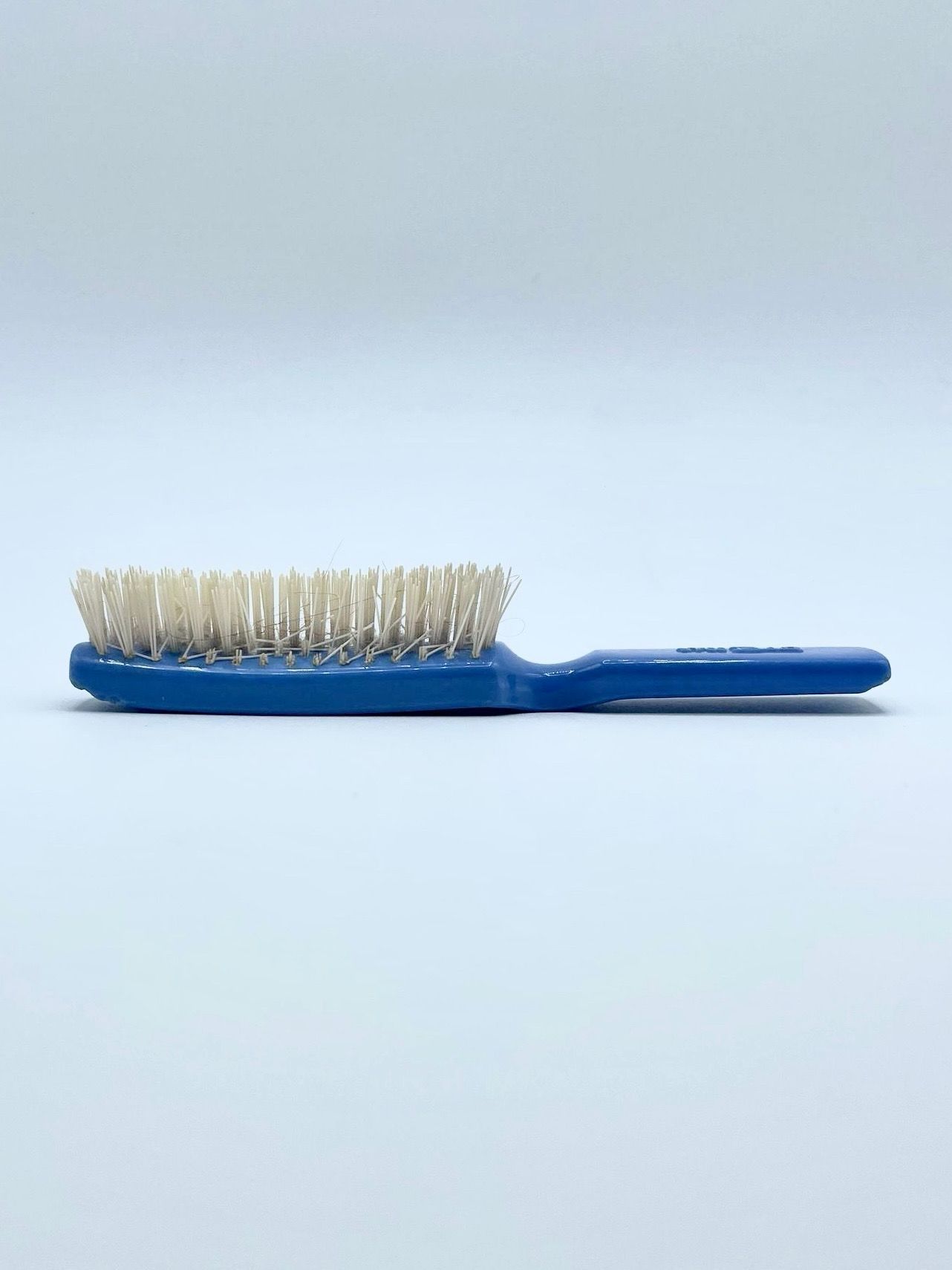
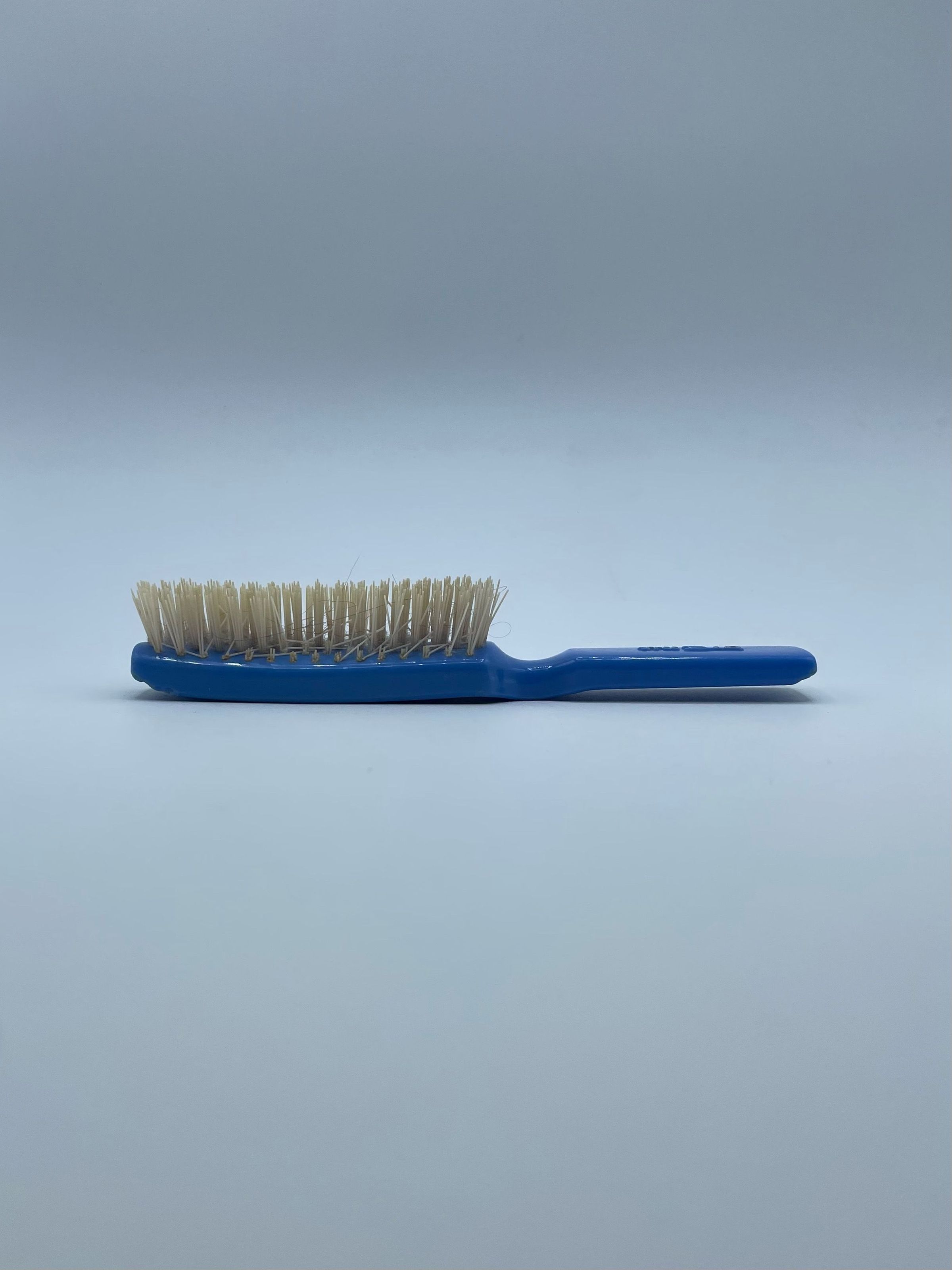
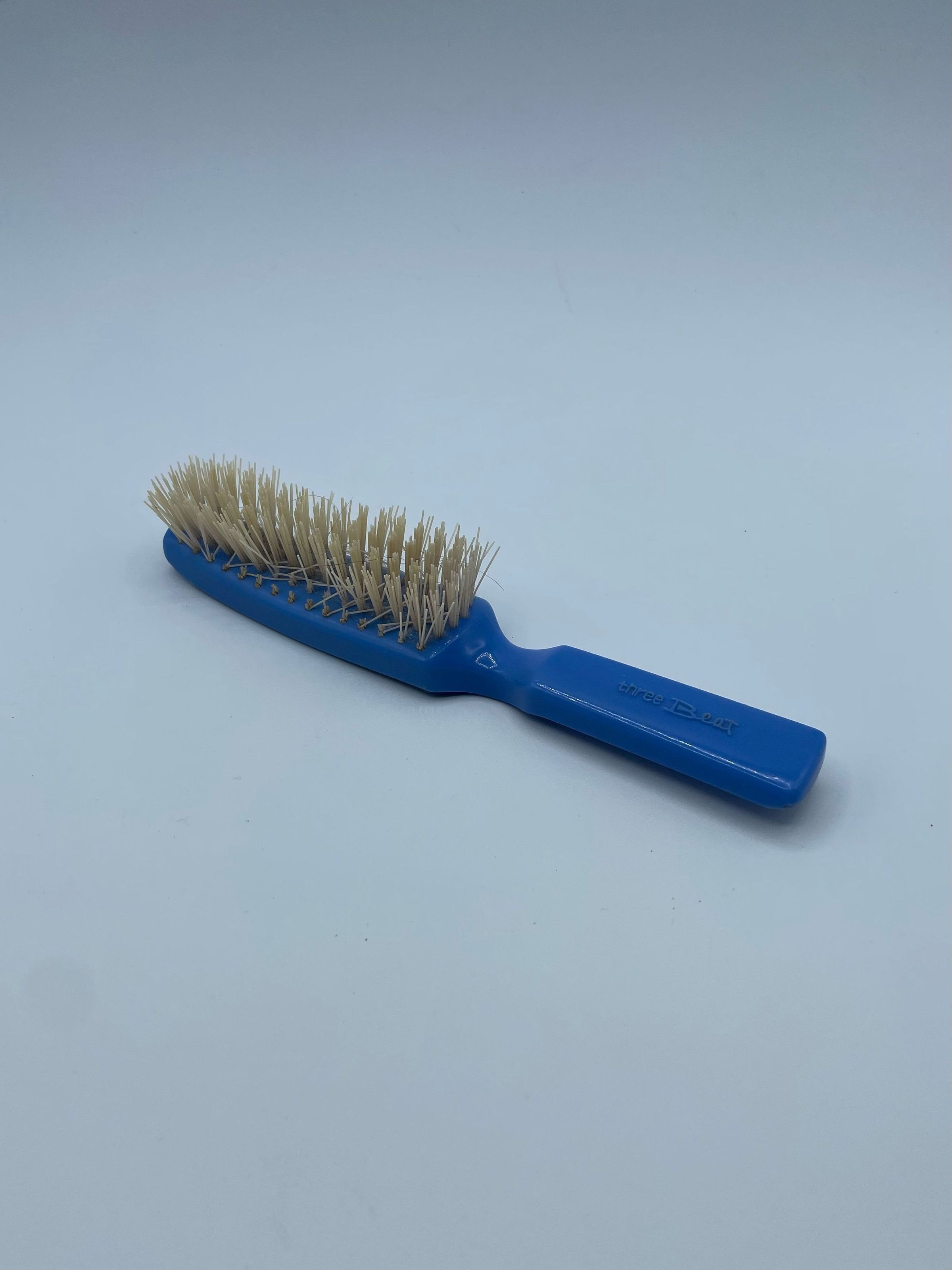
2025.1.46
Personal item of María A. Arús Caraballo.
The Cabrera Arús family collection
Gertrudis Caraballo Gálvez collecition
2025.1
MAKER: Marked "three Beat" (brand as embossed). The manufacturer is not identified; a targeted search did not turn up any documented " DATE / PERIOD: Not marked; undetermined. The bright glossy plastic points to a mid-to-late twentieth-century date. No later than 1984, as María A. Cabrera Arús took a similar one to school in that year. ORIGIN: Unknown. Nothing on the brush indicates where it was made.
"three Beat" embossed on the handle.
Plastic
Fair
María A. Arús Caraballo
owner
Havana
Cuba
Caribbean
Central America
use
New Jersey
U.S.A.
North America
use
The object is an ordinary personal hairbrush of inexpensive plastic construction, the kind produced in large numbers through the mid-to-late twentieth century. The embossed "Three Beat" reads as a brand or model name, but it does not match any documented brush maker found in a targeted search, so it should be recorded as the mark present rather than as an attributed manufacturer. As an everyday grooming item showing genuine use, the brush fits the pattern of ordinary personal goods retained well beyond the point most would be discarded, consistent with the household economy of saving serviceable items. Nothing about it ties it to the specific acquisition channels associated with the shaving items examined earlier, so its provenance should be left unrecorded unless separate documentation exists.